
Turkish vs. Greek Food: What’s the Real Difference?
If you have ever stood in front of a Mediterranean restaurant menu and wondered whether you were looking at Turkish food or Greek food, you are not alone. These two cuisines share a lot of common ground. Both use olive oil, grilled meats, fresh herbs, yogurt, and flatbread. Both have versions of dishes like gyros, kebabs, and stuffed vegetables. Both are considered part of the broader Mediterranean food family. And yet anyone who has eaten deeply from both traditions will tell you that they are distinctly different in ways that go well beyond geography.
This guide breaks down the real differences between Turkish and Greek food, where they overlap, where they diverge, and what makes each one worth knowing. Whether you are searching for Greek and Mediterranean restaurants near you in San Francisco, trying to decide between two menus, or simply curious about how neighboring food cultures developed such different personalities, this breakdown gives you a clear picture.
Shared Roots and Why These Cuisines Feel So Similar
Turkish and Greek food share a long, intertwined history. For several centuries, large parts of Greece were part of the Ottoman Empire, which was centered in what is now Turkey. That period of shared political history meant shared ingredients, shared cooking techniques, and shared dishes. Some foods that both cultures claim as their own, including stuffed grape leaves, baklava, and various yogurt-based dishes, developed during that overlapping period, and both cuisines carry versions of them today.
The geographic proximity matters too. Both Turkey and Greece border the Aegean and Mediterranean seas. Both have access to the same fish, the same olives, the same legumes, and the same climate that makes fresh vegetables abundant for much of the year. When two cultures cook in the same climate with the same ingredients for hundreds of years, some overlap is inevitable.
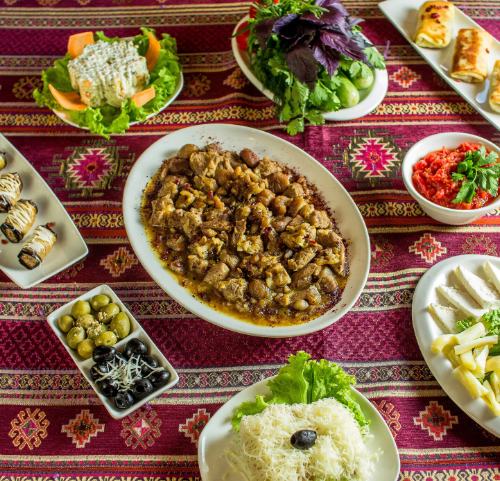
Both cuisines also share a strong tradition of mezze, the practice of serving many small dishes together rather than one large plated meal. Whether you are sitting down at a Greek taverna or a Turkish meyhane, you are likely to start with a spread of dips, salads, olives, and bread before the main proteins arrive. That way of eating creates a similar dining rhythm in both traditions.
So if they share so much, what actually makes them different? The answer comes down to spice philosophy, specific ingredients, cooking techniques, and the outside influences each cuisine absorbed over time.
Where Turkish and Greek Food Actually Diverge
The most noticeable difference between Turkish and Greek food is the spice profile. Turkish cuisine uses a wider and bolder range of spices, reflecting the Ottoman Empire’s historic role as a hub of the global spice trade. Cumin, allspice, coriander, sumac, red pepper flakes, dried mint, and cinnamon all appear regularly in Turkish cooking. These spices get layered into meat marinades, rice dishes, lentil soups, and vegetable preparations. The result is food that has warmth and depth even in simple dishes.
Greek cuisine uses herbs more than spices. Oregano, thyme, rosemary, and bay leaf are the workhorses of Greek flavor. Greek food tends to taste clean and bright rather than warm and complex. A grilled piece of lamb in a Greek preparation might be seasoned with lemon, oregano, garlic, and olive oil. The same cut of lamb in a Turkish preparation might get cumin, allspice, red pepper, and sumac in addition to the lemon and garlic. Both are delicious. The flavor experience is genuinely different.
Yogurt is central to both cuisines but used differently. In Turkish cooking, yogurt appears in marinades, cold dips, warm sauces poured over dishes like mantı, and as a table condiment alongside grilled meats. Cacik, the Turkish cucumber and yogurt dip, is very similar to Greek tzatziki but often made with dried mint rather than fresh dill, which gives it a slightly different character. In Greek cuisine, yogurt tends to appear more as a condiment or standalone dish rather than a component woven throughout the cooking process.
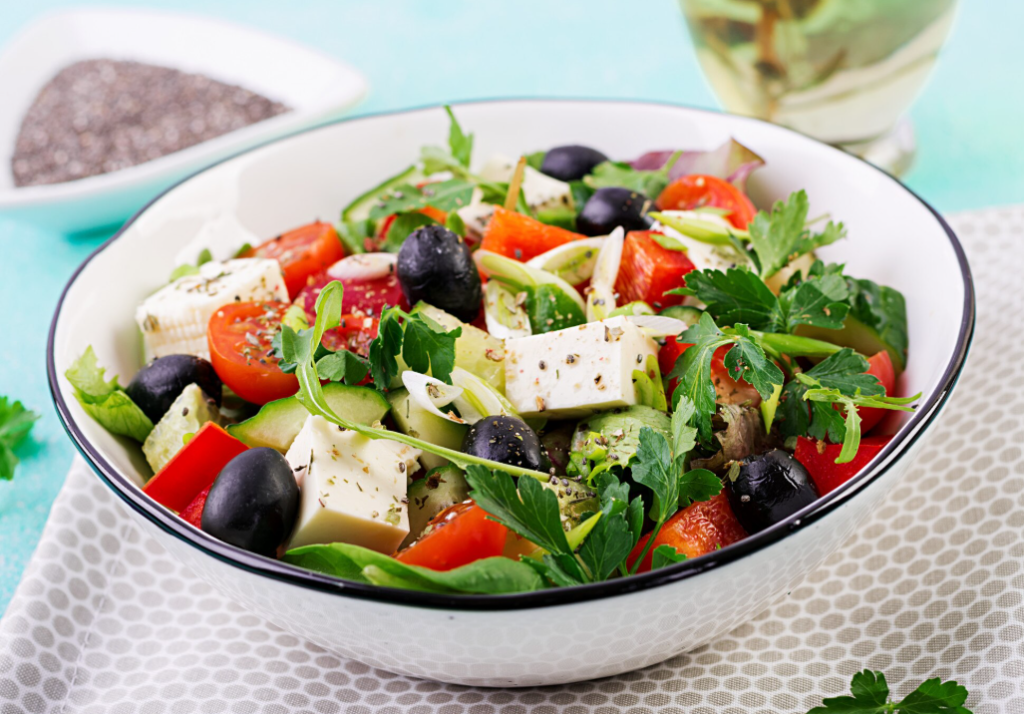
Cheese plays a much larger role in Greek cuisine than in Turkish food. Feta is everywhere in Greek cooking, crumbled over salads, baked into pastries, served as a side dish with olive oil and oregano, and used as a filling in spanakopita. Turkish cuisine uses cheese too, particularly white cheeses similar to feta, but it does not hold the same central place that it does in Greek food. The prominence of cheese in Greek cuisine reflects strong European and Balkan influences that Turkish food largely bypassed.
Phyllo pastry dishes are another area where Greek cuisine leans heavily on a specific technique. Spanakopita, tiropita, and baklava made with many thin buttered layers of phyllo are signature expressions of Greek cooking. Turkish cuisine has its own phyllo-based dishes, including börek and its own version of baklava, but the range and prominence of phyllo-based savory pastries in Greek food is distinctly Greek.
Here are a few key side-by-side differences worth knowing:
- Greek food leans on dried herbs like oregano and rosemary while Turkish food builds depth with warm spices like cumin, allspice, and sumac.
- Greek cuisine features cheese prominently, especially feta, while Turkish cuisine uses cheese more selectively.
- Turkish grilled meats like adana kebab and döner use specific spice blends that have no direct Greek equivalent.
- Greek cuisine has a stronger tradition of baked and slow-roasted dishes like moussaka and lamb kleftiko, while Turkish cuisine emphasizes open-flame grilling for its most iconic dishes.
- Both cuisines use flatbread but in different forms. Greek food uses pita in a softer, pocket style. Turkish flatbreads like lavash and the bread used for döner wraps are thinner and more pliable.
The Dishes That Define Each Cuisine
To really feel the difference between Turkish and Greek food, it helps to look at the dishes that each cuisine is most proud of.
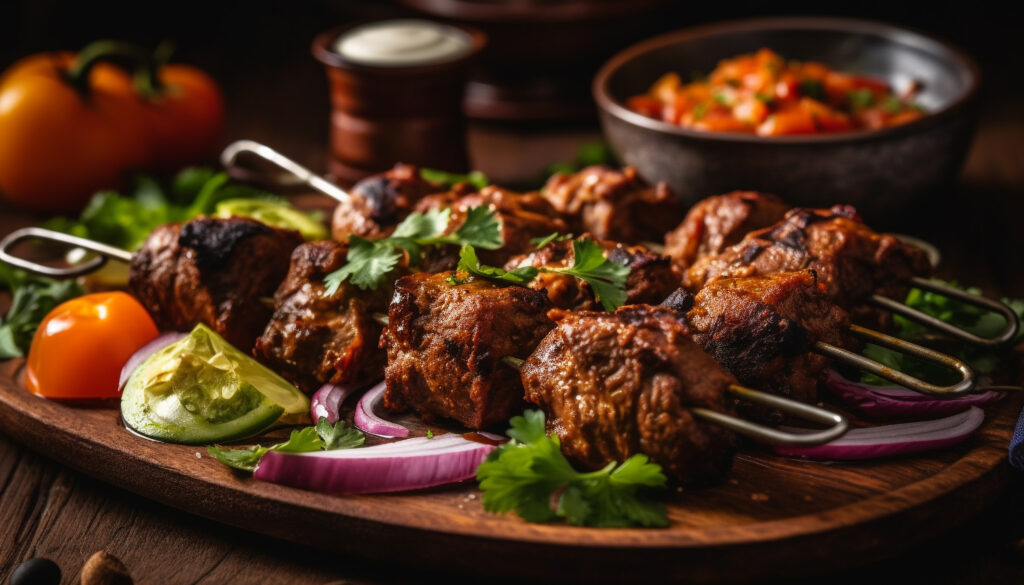
On the Turkish side, döner kebab is perhaps the most recognized dish globally. Meat stacked on a vertical rotating spit, slow-cooked until the outer layer is crispy and caramelized, then shaved into thin slices. The spice blend used for döner, which typically includes allspice, cumin, red pepper, and garlic, is distinctly Turkish and gives it a warm, complex flavor that you will not find in Greek gyros made in the traditional Greek style. Adana kebab, köfte, and şiş kebab all showcase the Turkish commitment to spiced, fire-grilled meat as the centerpiece of the meal.
On the Greek side, moussaka is the dish that most clearly expresses Greek cooking philosophy. Layers of eggplant, spiced ground meat, and béchamel sauce baked into a rich, casserole-style dish. The spicing is relatively mild, and the dish gets most of its character from the creamy béchamel and the slow baking process rather than bold spice. Souvlaki, grilled pork or chicken on a skewer seasoned simply with lemon and oregano, shows the Greek preference for letting the quality of the meat and the herbs carry the flavor.
Gyros deserve a specific mention because they exist in both traditions and the comparison is useful. A Greek gyro is typically made with pork or chicken, seasoned with oregano and garlic, and served with tzatziki made with fresh dill. A Turkish döner, which is the direct predecessor of the gyro, uses lamb or beef seasoned with a warmer spice blend. The bread, the sauce, and the spice profile are all slightly different, and once you have had both done well, you can taste the distinction clearly.
Where to Experience Both Traditions in San Francisco
San Francisco is one of the best cities in the country for exploring Turkish and Mediterranean food, and the city’s restaurant scene has genuine options for both traditions. Anyone looking for the best Mediterranean restaurants in San Francisco or searching for authentic Turkish food in the city will find that quality varies widely and that the best spots tend to be the ones where the food actually reflects the tradition it comes from.
Presidio Kebab Mediterranean Restaurant near the Presidio is a well-regarded option for Turkish and broader Mediterranean dining in the Bay Area. The menu covers Turkish kebabs, gyro sandwiches, döner, hummus, warm pita, Mediterranean platters, salads, and wraps. It is a strong choice for anyone who wants to experience the Turkish side of the Turkish and Greek comparison firsthand, with dishes that reflect genuine spice traditions and open-flame grilling techniques.
The restaurant works for a range of occasions. Families looking for family-friendly restaurants in the Presidio will find the menu approachable. Groups can share platters and build a spread similar to a mezze experience. For anyone who relies on best takeout Mediterranean food in SF through a busy week, the wraps and kebab plates travel well and hold their flavor after pickup.
Presidio Kebab Mediterranean Restaurant is also a solid choice for Bay Area foodies who want to dine local in San Francisco and taste food that has a clear cultural identity rather than a blended, generic Mediterranean approach.
Turkish and Greek food are neighbors in the best possible sense. They share a foundation, push against each other in interesting ways, and have each developed a distinct identity that rewards careful attention. Understanding the differences between them does not require a food history degree. It just requires a few good meals and the willingness to pay attention to what is actually on the plate.