
Eastern & Western Mediterranean Cuisine Comparison
The word Mediterranean gets used a lot in food conversations, and most people have a general sense of what it means. Olive oil, fresh vegetables, grilled proteins, warm bread. But the Mediterranean region itself is enormous, stretching from the coasts of Spain and Morocco in the west all the way to Turkey, Lebanon, and Syria in the east. The food across that entire stretch shares a common foundation, but the two ends of it have developed into genuinely distinct culinary traditions with their own ingredients, cooking methods, flavor profiles, and cultural identities.
If you have ever wondered why Turkish food tastes different from Italian food despite both being called Mediterranean, or why a Lebanese mezze spread feels different from a Spanish tapas table even though both involve many small shared dishes, this guide is for you. Understanding the real differences between Eastern and Western Mediterranean cuisine helps you appreciate both more clearly and gives you a much better framework for exploring the full range of what this food tradition has to offer.
What Eastern and Western Mediterranean Food Actually Means
The Mediterranean Sea borders parts of three continents. On the Western side, you have Spain, southern France, and Italy. On the southern shore, you have Morocco, Algeria, Tunisia, and Libya. Moving east across the northern shore, you reach Greece, Turkey, Lebanon, Syria, and Israel. Each of these countries has its own distinct food culture, but broadly speaking, food scholars and chefs tend to group them into a Western Mediterranean tradition that includes Spain, France, and Italy, and an Eastern Mediterranean tradition that covers Turkey, Greece, Lebanon, Syria, and the surrounding region.
The Eastern Mediterranean is also sometimes called the Levantine tradition, though that term more specifically refers to the food of Lebanon, Syria, Jordan, and Palestine rather than Turkey and Greece. For the purposes of this comparison, Eastern Mediterranean cuisine covers Turkish food, Greek food, Lebanese and Syrian cooking, and the broader Middle Eastern culinary traditions that share ingredients and techniques with those countries.
Both Eastern and Western Mediterranean cuisines share a foundation of olive oil as the dominant cooking fat, abundant fresh vegetables and legumes, seafood from the shared sea, and a preference for relatively simple preparation methods that highlight the quality of the ingredients rather than masking them. But the similarities start to diverge pretty quickly once you look at the specific ingredients, spice traditions, and dish structures on each side.
The Key Differences in Ingredients and Flavor
The clearest difference between Eastern and Western Mediterranean food is the spice profile. Western Mediterranean cuisine, particularly Italian and Spanish cooking, tends to use herbs as the primary flavor builders. Basil, oregano, rosemary, thyme, and bay leaf do most of the flavor work. The food is aromatic and herbaceous but relatively restrained in terms of warm spice. Italian pasta sauces, Spanish rice dishes, and French Provençal cooking are all about letting fresh, high-quality ingredients express themselves with gentle herbal support.
Eastern Mediterranean cuisine uses a significantly more complex spice palette. Turkish food, Middle Eastern cooking, and Greek food to some extent all incorporate warm spices like cumin, allspice, coriander, cinnamon, and sumac into savory dishes. This reflects the Eastern Mediterranean’s proximity to historic spice trade routes that ran through Turkey, Lebanon, and Egypt, connecting Asia and the Middle East to Europe. The spice bazaars of Istanbul were among the most important trading hubs in the world for several centuries, and the food culture that developed around them naturally absorbed more spice complexity than its Western counterpart.
Dairy products also differ significantly between the two traditions. Western Mediterranean cooking uses butter, cream, aged hard cheeses like Parmesan and Manchego, and fresh cheeses like ricotta and burrata as central ingredients. Eastern Mediterranean cooking relies far more on yogurt and soft white cheeses like feta. Yogurt in Eastern Mediterranean cuisine does the work that cream does in Western cooking. It tenderizes meat as a marinade, thickens sauces, cools and balances spiced dishes, and appears as both a dip and a condiment across Turkish, Greek, and Lebanese menus.
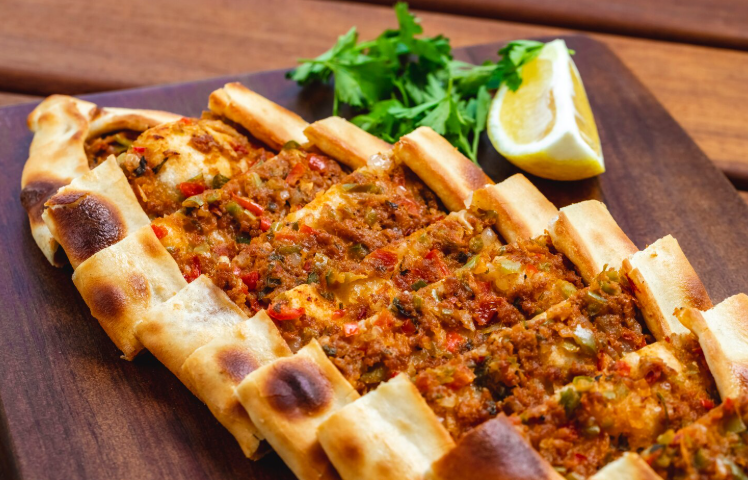
Bread traditions also reflect the division. Western Mediterranean countries have strong leavened bread cultures, with Italy’s variety of regional breads, France’s baguette tradition, and Spain’s dense country loaves all forming important parts of daily eating. Eastern Mediterranean cuisine is built around flatbreads, from the soft pita used across Greek and Turkish cooking to the thin lavash of Turkey and the stretchy taboon bread of Lebanon. These flatbreads are used to scoop dips, wrap grilled meats, and soak up sauces in ways that thick leavened bread cannot replicate as efficiently.
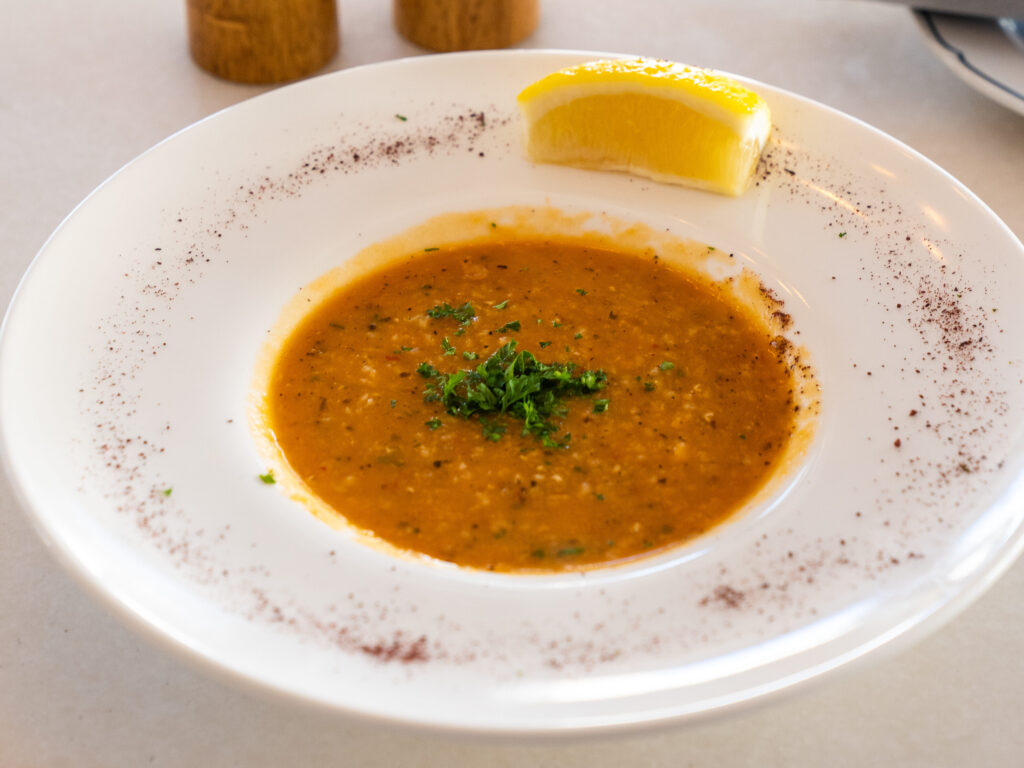
Legumes show up in both traditions but in different roles. In Western Mediterranean cooking, white beans, lentils, and chickpeas appear in soups and stews alongside meat or vegetables. In Eastern Mediterranean cuisine, legumes take on a more central role. Hummus made from chickpeas is one of the signature dishes of the Eastern tradition. Red lentil soup is a staple that appears on Turkish and Lebanese menus as a serious course rather than a side dish. Falafel, made from ground chickpeas or fava beans, is a primary protein rather than an accompaniment.
How the Dishes Reflect These Differences
Looking at specific dishes from each tradition makes the comparison concrete and useful.
On the Western Mediterranean side, a classic Italian meal might start with bruschetta topped with tomatoes and basil, move through a pasta course with a simple tomato or cream sauce, and finish with a grilled fish or roasted meat. The flavors are clean and relatively simple, relying on the quality of the olive oil, the ripeness of the tomatoes, and the freshness of the herbs rather than spice complexity.
A Spanish meal might follow a similar structure but with regional proteins like jamón, chorizo, and fresh seafood, and supporting flavors built from smoked paprika, saffron, garlic, and white wine. The tapas tradition shares the mezze concept of multiple small shared dishes, but the flavors stay within the herbaceous, lightly spiced range of Western Mediterranean cooking.
Eastern Mediterranean meals look and taste quite different. A Turkish meal typically starts with a mezze spread that might include hummus, baba ghanoush, ezme, stuffed grape leaves, fresh salads dressed with sumac and lemon, and cacik. The main course is usually a grilled protein, lamb shish, chicken döner, adana kebab, or a mixed grill plate, served with rice or bulgur, warm flatbread, and fresh herbs. The spices woven through the marinated meats, the acidity from sumac and lemon, and the cooling contrast of yogurt-based dips create a layered, complex meal that tastes fundamentally different from a Western Mediterranean spread even when the core ingredients overlap.
A Lebanese mezze is similar to a Turkish one in structure but with its own distinct character. Tabbouleh, which is more herb than grain, takes center stage alongside hummus, raw vegetables, labneh, and kibbeh. Shawarma and grilled meats follow. The warm spice profile includes allspice, cinnamon, and seven-spice blends that give the food a warmer, slightly sweeter character than Greek or Italian food.
Here are a few quick side-by-side examples that show the differences clearly:
- Both traditions use flatbread or bread, but Western Mediterranean breads are leavened and thick while Eastern Mediterranean flatbreads are thin, pliable, and used to wrap or scoop.
- Both use olive oil as the primary fat, but Western Mediterranean cooking incorporates more butter and cream in certain dishes, while Eastern Mediterranean cooking stays almost entirely within olive oil and yogurt as fat sources.
- Both have grilled meat traditions, but Eastern Mediterranean grilling involves complex spice marinades and preparations like döner kebab and lamb gyro that have no real Western equivalent.
- Both use fresh herbs, but Eastern Mediterranean cooking layers dried herbs like mint and za’atar into cooked dishes as primary flavoring agents, while Western Mediterranean cooking reserves dried herbs more for stocks and slow-cooked preparations.
Tasting Both Traditions in San Francisco
San Francisco’s food scene has genuine representation from both Eastern and Western Mediterranean cooking, and Bay Area foodies who want to explore the full range of what this cuisine encompasses have real options available. Anyone searching for the best Mediterranean restaurants in San Francisco or looking for authentic Turkish food in the city will find that Eastern Mediterranean cooking is particularly well represented here, with Turkish, Lebanese, and Greek-influenced restaurants spread across the Bay Area.
Presidio Kebab Mediterranean Restaurant near the Presidio offers some of the best Eastern Mediterranean food in San Francisco, with a menu built around Turkish kebabs, döner, hummus, warm pita, gyro sandwiches, fresh salads, Mediterranean platters, and Middle Eastern-influenced wraps. The food reflects the spice depth, herb freshness, and grilled protein tradition that defines Eastern Mediterranean cuisine at its best.
The restaurant works well for different types of diners and dining situations. Families looking for family-friendly restaurants in the Presidio will find the menu approachable and varied. Groups can build a mezze-style spread by sharing multiple starters and platters. For anyone who wants the best takeout Mediterranean food in SF for a busy evening, the kebab plates and wraps hold up well and deliver the full Eastern Mediterranean flavor experience at home.
Presidio Kebab Mediterranean Restaurant is also a strong option for anyone focused on healthy dining options in SF, since the Eastern Mediterranean cooking style naturally emphasizes grilled protein, fresh vegetables, legumes, and olive oil over heavy sauces or fried preparations.
Eastern and Western Mediterranean food are two expressions of the same broad tradition, shaped by geography, trade history, and centuries of cultural development. Understanding how they differ makes every meal from either tradition more interesting and more flavorful. The next time you sit down to a plate of Turkish kebabs and hummus or a bowl of fresh tabbouleh with warm flatbread, you are tasting thousands of years of Eastern Mediterranean food culture in every bite. That is a good thing to know.