
Greek Salad: A Taste of Tradition
Some dishes have a way of tasting like somewhere else entirely. Greek salad is one of them. The moment you eat a properly made one, something about the combination of ripe tomato, cool cucumber, sharp red onion, briny olive, salty feta, and a clean drizzle of olive oil with dried oregano transports you. It does not matter if you are sitting at a table in Athens, a café in San Francisco, or your own kitchen. That flavor profile is distinct enough that it carries the whole geography of the Eastern Mediterranean in a single bowl.
What is interesting about Greek salad is how little most people actually know about it beyond the basic ingredients. Where did it come from? Why does the version you eat in Greece taste so different from what you get at most American restaurants? What makes a Greek salad genuinely good versus one that is technically correct but somehow flat? And how does it connect to the broader tradition of Mediterranean cuisine that runs through Turkish food, Middle Eastern cooking, and the whole Eastern Mediterranean food culture?
This guide answers all of that. It covers the real history and tradition behind the Greek salad, what makes an authentic version different from the imitation, how it fits into the larger Mediterranean food story, and what to look for when you want one done right in San Francisco.
Where Greek Salad Actually Comes From
The dish most people call Greek salad is known in Greece as horiatiki, which translates roughly to village salad. The name is telling. This is not a refined or elaborate preparation. It is the kind of food that farmers and rural families across Greece have eaten for generations, built from whatever was ripe, available, and grown nearby. Tomatoes, cucumbers, olives, onion, and sheep’s milk feta cheese, along with a generous pour of local olive oil and a sprinkle of dried oregano. That is the original and, in many ways, the ideal version.
One of the things that often surprises people who encounter the dish for the first time in Greece is that horiatiki does not include lettuce. This confuses visitors who grew up eating the American version, which almost always builds the salad on a bed of romaine or mixed greens. The original has no greens at all. The vegetables are cut large, sometimes in wedges rather than small pieces, and the feta comes as a whole slab on top rather than crumbled throughout. The olive oil is poured on generously, not in a small careful drizzle. The result is a salad that is filling, substantial, and rich in a way that a lettuce-based salad rarely manages to be.
The history of the dish connects directly to Greek agricultural life and the Mediterranean climate that made these specific ingredients so abundant. Greece has been growing olives for thousands of years, and the olive oil that goes into horiatiki is not a condiment. It is a primary ingredient. Feta cheese has been made in Greece for centuries and carries protected designation of origin status in the European Union, meaning authentic feta can only be made in specific regions of Greece using specific milk. These are not just ingredients. They are the product of a very specific land, climate, and food culture.
What Separates a Great Greek Salad from a Mediocre One
The Greek salad is one of those dishes where the gap between a great version and a mediocre one is enormous, and the difference comes almost entirely from ingredient quality rather than technique. There is almost no cooking involved. What you put in is what you get, which means every element has to be worth eating on its own before it goes into the bowl.
Tomatoes are the biggest variable. A Greek salad made with tomatoes that were picked ripe and eaten quickly tastes like a completely different dish from one made with pale, watery tomatoes that have been refrigerated for days. The tomato in a good horiatiki is sweet, slightly acidic, and juicy enough that its liquid combines with the olive oil in the bowl to create a natural dressing. In Greece, this salad is almost always made in summer when tomatoes are at their peak. The rest of the year, the dish is simply not as good, and most honest Greek cooks will tell you that.
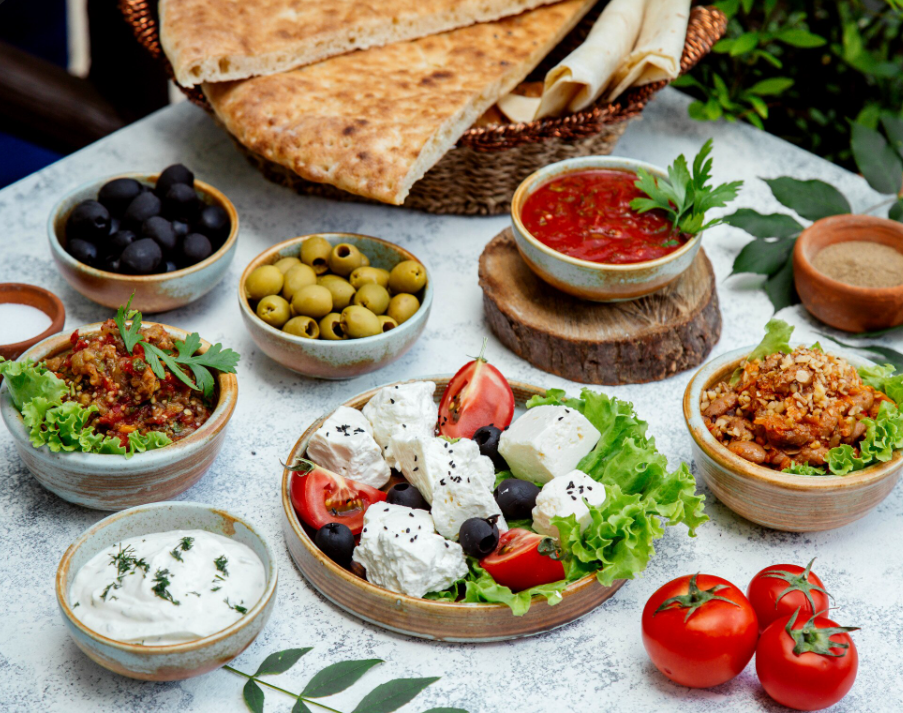
Feta quality matters enormously. True Greek feta made from sheep’s milk has a creamier, more complex flavor than the mass-produced cow’s milk versions that fill most grocery store shelves. It is tangy and slightly crumbly with a richness that balances the acidity of the tomato and the bitterness of the olive. Using good feta transforms the dish. Using cheap feta makes it taste like a salad that happens to have some white cheese in it.
Olives are the other component that most American versions of this salad get wrong. Horiatiki traditionally uses Kalamata olives, which are dark, meaty, and have a distinctive tartness and slight fruitiness that sets them apart from generic black olives. Kalamata olives are cured in red wine vinegar and olive oil, which gives them a flavor depth that regular canned black olives completely lack. Swapping one for the other is not a minor substitution. It changes the entire flavor experience of the dish.
The olive oil and oregano finishing the salad need to be good quality too. Extra virgin olive oil with some actual flavor and a peppery finish, combined with dried Greek oregano that has real aroma rather than the dusty, flavorless kind, pulls the whole dish together in a way that vegetable oil and generic spice blend cannot replicate.
How Greek Salad Fits Into the Broader Mediterranean Tradition
Greek salad does not exist in isolation. It is one expression of a salad philosophy that runs across the entire Eastern Mediterranean and connects directly to Turkish food, Middle Eastern cuisine, and the broader Mediterranean tradition of eating fresh, simple, ingredient-forward food with olive oil and acid as the primary dressing.
Turkish cuisine has its own version of this approach in dishes like çoban salatası, which translates to shepherd’s salad. It is made from finely chopped tomatoes, cucumbers, peppers, onion, and fresh parsley, dressed with olive oil and lemon juice and often finished with sumac for a tart brightness. The structure is similar to horiatiki but the flavor is different, with the lemon and sumac replacing the Greek combination of olive oil and oregano, and the fine chop replacing the large cut. Both dishes reflect the same underlying principle: the best salad is the one that lets the vegetables taste like themselves.
Lebanese and broader Middle Eastern salads like fattoush and tabbouleh follow the same logic. Fresh produce, good olive oil, acid from lemon or sumac, and herbs doing most of the flavor work. No cream dressings, no croutons, no complex preparation. The freshness and quality of the ingredients carry the dish.
This shared salad philosophy is part of what makes Mediterranean and Turkish restaurants in San Francisco so reliable for anyone looking for healthy Mediterranean food in the city. The salads here are not the kind of afterthought that you push aside to get to the main course. At good Mediterranean restaurants, the salad is part of the meal in a meaningful way, often arriving alongside or before the main protein and holding its own as a course.
Where to Find a Proper Greek Salad
San Francisco’s food culture rewards restaurants that take ingredient quality seriously, which is one of the reasons Bay Area Mediterranean food has developed such a strong following among local diners. People here notice the difference between a good olive and a cheap one, between real feta and a processed substitute, and they return to the places that get these things right.
Presidio Kebab Mediterranean Restaurant near the Presidio is a well-regarded option for anyone searching for fresh, well-made Mediterranean cuisine in San Francisco. The menu covers Turkish kebabs, grilled meats, hummus, warm pita, gyro sandwiches, Mediterranean platters, and fresh salads that reflect the same ingredient-forward philosophy that makes the Greek salad tradition so enduring. If you appreciate a salad that is built on real produce and dressed simply with good olive oil, the salads here fit that standard.
The restaurant works well for a wide range of dining situations. Families looking for family-friendly restaurants in the Presidio will find the menu covers enough variety that everyone can eat well. Anyone focused on healthy dining options in SF will find that the salads and grilled proteins together make a naturally nutritious meal. For anyone relying on the best takeout Mediterranean food in SF on a busy weeknight, the salads travel well and taste just as good at home as they do in the restaurant.
Presidio Kebab Mediterranean Restaurant is also a natural stop for Bay Area foodies who want to dine local in San Francisco and experience the kind of cooking that takes simple ingredients seriously rather than dressing them up in ways that mask what makes them good.
Greek salad has lasted this long not because it is complicated or impressive in a technical sense, but because it is honest. It asks nothing of you except good ingredients handled with care. That is a harder standard to meet than it sounds, and when a restaurant meets it, you notice immediately. The bowl in front of you tastes clean, bright, and alive. That is the whole point of the dish, and it has been the point for a very long time.