
Vegetarian Options in Turkish Cuisine
A lot of people assume that Turkish food is mostly about meat. Kebabs, döner, grilled lamb, ground beef skewers. And yes, those dishes are a huge part of the tradition and deserve every bit of attention they get. But there is another side to Turkish cuisine that does not get talked about nearly as much, and it is just as good. Turkish food has one of the richest vegetarian traditions of any cuisine in the world, built over centuries from a culture that produced elaborate palace kitchens, regional farming communities, and a deep respect for vegetables, legumes, and grains as serious food rather than side dishes.
If you are vegetarian, or you are simply someone who wants to eat less meat without sacrificing flavor, Turkish and broader Mediterranean cuisine has more to offer than you might expect. This guide covers the best vegetarian dishes in Turkish food, what makes them so satisfying, and how to order well at a Turkish or Mediterranean restaurant whether you are eating in or getting takeout.
Why Turkish Cuisine Has Such a Strong Vegetarian Foundation
The vegetarian depth of Turkish food is not a recent adaptation made to appeal to modern dietary trends. It has been there all along, rooted in a few important factors. Rural and agricultural communities across Turkey historically relied heavily on vegetables, legumes, and grains because they were affordable, abundant, and could be stored through winter. These communities developed sophisticated ways of cooking plant-based food that made it genuinely satisfying rather than just filling.
Religious fasting traditions also played a role. Certain periods of fasting in Muslim and Orthodox Christian communities within the Ottoman Empire encouraged meatless cooking for extended stretches of the year. Cooks in those contexts had to find ways to make vegetarian food feel complete and flavorful, and the dishes they developed became permanent parts of the broader culinary tradition.
Olive oil is at the center of Turkish vegetarian cooking. A whole category of Turkish dishes is described with the phrase zeytinyagli, which means cooked in olive oil. These are vegetable dishes prepared with good quality olive oil, aromatics, and sometimes a little tomato or lemon, then served at room temperature. The technique allows the vegetables to absorb the oil slowly, which concentrates their flavor and gives them a rich, satisfying quality that you would not expect from a plant-based dish. This category alone represents dozens of distinct dishes across different regions of Turkey.
The spice tradition helps too. The same warm blend of cumin, allspice, coriander, sumac, dried mint, and red pepper that makes Turkish meat dishes so compelling works just as well on vegetables, lentils, and chickpeas. When plant-based ingredients get that kind of flavor treatment, they do not taste like a lesser version of a meat dish. They taste like their own thing, with their own character.
The Best Vegetarian Dishes in Turkish and Mediterranean Cuisine
Here is where things get specific and practical. These are the vegetarian dishes that show up most consistently at Turkish and Mediterranean restaurants and give you the best sense of what plant-based Turkish cooking can actually do.
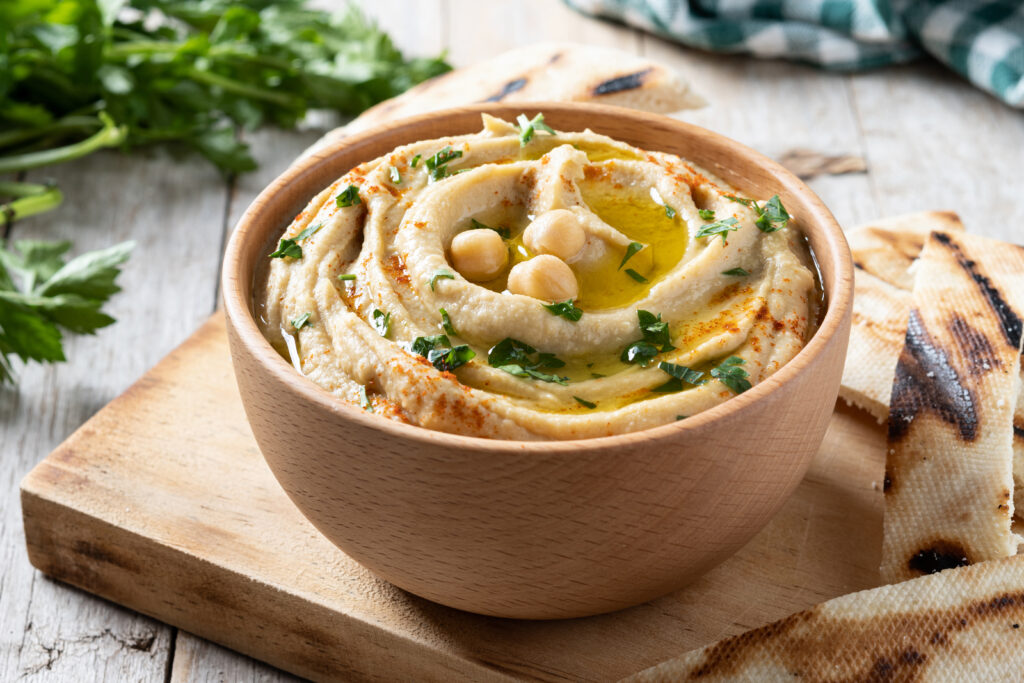
Hummus is the most universally known dish in this category. Made from blended chickpeas, tahini, lemon juice, garlic, and olive oil, it is smooth, creamy, and deeply satisfying. The flavor has multiple layers. You get the earthiness of the chickpeas, the nuttiness of the tahini, the brightness of the lemon, and the subtle heat of the garlic all in one scoop. Served with warm pita bread, it is a complete snack or starter and one of the most reliable things to order at any Mediterranean restaurant in San Francisco.
Baba ghanoush is roasted eggplant blended into a smoky, silky dip. The eggplant gets charred directly over a flame or under a broiler, which creates a deep smokiness that carries through to the finished dish. Mixed with tahini, lemon, and garlic, baba ghanoush has a bolder, slightly more complex flavor than hummus. It is one of the best examples of how Turkish and broader Mediterranean cooking transforms a simple vegetable into something with real depth.
Mercimek çorbası, or red lentil soup, is one of the most beloved comfort foods in Turkish cuisine. Red lentils get cooked with onion, carrot, and cumin until they break down into a smooth, thick soup. A finishing drizzle of olive oil infused with red pepper flakes and a squeeze of lemon brightens the whole bowl. It is warm, filling, and nutritionally complete in a way that most soups are not. A bowl of this alongside some fresh bread is a genuinely satisfying meal.
Imam bayildi is a classic Turkish dish and one of the most famous vegetarian preparations in the cuisine. Whole eggplants get stuffed with a mixture of caramelized onions, tomatoes, garlic, and herbs, then braised slowly in olive oil until everything is completely soft and the flavors have melded together. The name translates roughly to “the imam fainted,” and the story behind it involves a religious leader who was so moved by the dish that he lost consciousness. Whether or not you believe the story, the dish is worth knowing about.
Stuffed peppers and stuffed tomatoes, called dolma and sarma depending on the preparation, appear throughout Turkish cuisine in both meat and vegetarian versions. The vegetarian fillings typically use rice, pine nuts, currants, and herbs like dill and mint. The sweetness of the currants, the crunch of the pine nuts, and the aromatic herbs make the filling interesting enough to stand completely on its own.
Tabbouleh, which is shared across Turkish, Lebanese, and broader Middle Eastern cuisine, is a fresh herb and grain salad made primarily from chopped parsley, bulgur wheat, tomato, mint, lemon juice, and olive oil. It is light, herby, and bright rather than heavy or starchy. The parsley is the dominant ingredient, which gives it an intensely green, clean flavor.
A few more vegetarian dishes worth knowing:
- Ezme is a finely chopped tomato, pepper, and herb salad seasoned with sumac and pomegranate molasses. It has a fresh, slightly spicy kick and works as a dip, a condiment, or a small salad.
- Cacik is cold yogurt mixed with grated cucumber, garlic, and dried mint. It is tangy, cooling, and versatile. It pairs well with spiced dishes and flatbread.
- Sigara böreği are crispy fried phyllo rolls filled with white cheese and herbs. They are small, addictive, and one of the most popular starters at Turkish restaurants.
- Roasted vegetable platters with olive oil, lemon, and herbs appear on many Mediterranean menus and showcase the zeytinyagli tradition of letting good vegetables speak for themselves.
How to Order Vegetarian at a Turkish or Mediterranean Restaurant
Knowing the dishes is useful. Knowing how to build a full meal from them is even better. Here are a few practical tips for getting the most out of a vegetarian order at a Turkish or Mediterranean restaurant.
Start with a dip or two. Hummus and baba ghanoush together with warm pita make a strong opener that also works as a light meal on their own if you are not very hungry. If you want something lighter to begin, a fresh salad like tabbouleh or a simple cucumber and tomato salad with sumac and lemon is a clean way to start.
Build your main course around a substantial vegetarian dish rather than treating plant-based options as sides. Red lentil soup, a stuffed pepper or dolma plate, or a roasted vegetable platter can anchor a meal the same way a protein dish would. Add a grain on the side, whether rice, bulgur, or flatbread, and you have a complete and satisfying plate.
For takeout, dips and cold salads travel especially well. Hummus containers hold up perfectly at room temperature for several hours, and cold dishes like cacik and tabbouleh stay fresh for the drive home. Warm dishes like lentil soup are best eaten sooner, so factor that in if you are ordering for later.
Finding Great Vegetarian Mediterranean Food in San Francisco
San Francisco has one of the most vegetarian-friendly food cultures in the country, and the city’s Mediterranean restaurant scene reflects that. Anyone searching for healthy Mediterranean food in San Francisco or looking for Mediterranean cuisine near them that works for plant-based diets will find real options at Turkish and Middle Eastern restaurants across the Bay Area.
Presidio Kebab Mediterranean Restaurant near the Presidio is a well-regarded spot for Turkish and Mediterranean food in San Francisco, and the menu includes a range of vegetarian-friendly options alongside its grilled meat dishes. Hummus, fresh salads, warm pita, and vegetable-based Mediterranean platters are all part of what the kitchen offers. It is a strong choice for groups with mixed dietary preferences, since meat eaters and vegetarians can both eat well from the same menu without anyone having to compromise.
The restaurant also works for a range of dining situations beyond just the food itself. Families looking for family-friendly restaurants in the Presidio will find the menu broad and accessible. Anyone who wants the best takeout Mediterranean food in SF with vegetarian-friendly options will find that the plant-based dishes here travel just as well as the meat ones.
Presidio Kebab Mediterranean Restaurant is a good introduction to this side of Turkish and Mediterranean cuisine for Bay Area foodies who may not have explored the vegetarian depth of the tradition before.
Turkish cuisine does not ask you to choose between flavor and a plant-based meal. The tradition has been feeding people well without relying on meat for a very long time, and the dishes it developed along the way are some of the most satisfying and flavorful vegetarian food you can find anywhere in the world. If you have only ever ordered the kebabs, you are missing half of what this cuisine has to offer.