
Beginner’s Guide to Middle Eastern Food
Middle Eastern food is one of those cuisines that a lot of people have eaten without fully realizing it. If you have ever had hummus with warm pita at a party, ordered a gyro from a food truck, or tried falafel at a street stall, you have already had a taste of this food tradition. And yet many people still feel like Middle Eastern cuisine is unfamiliar territory when they sit down at a restaurant menu for the first time.
This guide is for anyone who wants to understand what Middle Eastern food actually is, what the most popular dishes are, how they taste, and what to order when you are new to it. It also covers how Middle Eastern cuisine connects to Turkish and Mediterranean food, since these traditions share a lot of ingredients, techniques, and flavor principles. By the end, you will have a clear picture of what to expect and enough confidence to order without second-guessing yourself.
What Is Middle Eastern Food, and Where Does It Come From?
Middle Eastern cuisine covers the food traditions of a large region that includes countries like Lebanon, Turkey, Israel, Jordan, Syria, Egypt, Iran, and the Gulf states. Each country has its own dishes and regional specialties, but there is a shared foundation of ingredients and cooking methods that ties it all together.
At the core of this cuisine are legumes like chickpeas and lentils, grains like bulgur and rice, fresh herbs like parsley and mint, and proteins like lamb, chicken, and beef prepared mostly by grilling, roasting, or slow braising. Olive oil is the dominant fat. Spices like cumin, coriander, allspice, sumac, and za’atar provide flavor without relying on heavy sauces. The result is food that is bold, layered, and satisfying without being heavy.
One thing that makes Middle Eastern food approachable for beginners is that many of the most iconic dishes are already familiar to Western diners. Hummus has become a mainstream grocery staple. Falafel and gyros show up in cities everywhere. Kebabs of various kinds are popular across the Bay Area restaurant scene. You likely already have a frame of reference, even if you have not eaten at a dedicated Middle Eastern restaurant before.
Turkish food fits naturally within the broader Middle Eastern and Mediterranean food family. Turkey shares borders with several Middle Eastern countries and draws from Arab, Persian, and Central Asian cooking traditions. Many of the dishes you find at a Turkish restaurant, including döner kebab, köfte, and various mezze spreads, overlap significantly with what you would find at a Lebanese or Syrian restaurant. The spices are similar. The cooking philosophy is similar. The emphasis on grilled meat, fresh vegetables, and legumes is the same.
The Dishes Every Beginner Should Know
If you are sitting down at a Middle Eastern or Mediterranean restaurant for the first time, these are the dishes worth understanding before you order.
Hummus is the most universally known Middle Eastern food outside of the region. It is made by blending cooked chickpeas with tahini, lemon juice, garlic, and olive oil into a smooth, creamy dip. Good hummus has a rich, nutty flavor with a slight tang from the lemon. It is almost always served with warm pita bread and often gets a drizzle of olive oil and a sprinkle of paprika or za’atar on top. It works as a starter, a side dish, or even a light meal on its own.
Falafel is made from ground chickpeas or fava beans mixed with herbs, garlic, and spices, then shaped into small balls or patties and fried until crispy on the outside and soft in the middle. The flavor is earthy and herby, with a satisfying crunch. Falafel gets served on its own, inside a wrap with vegetables and tahini sauce, or as part of a mezze spread.
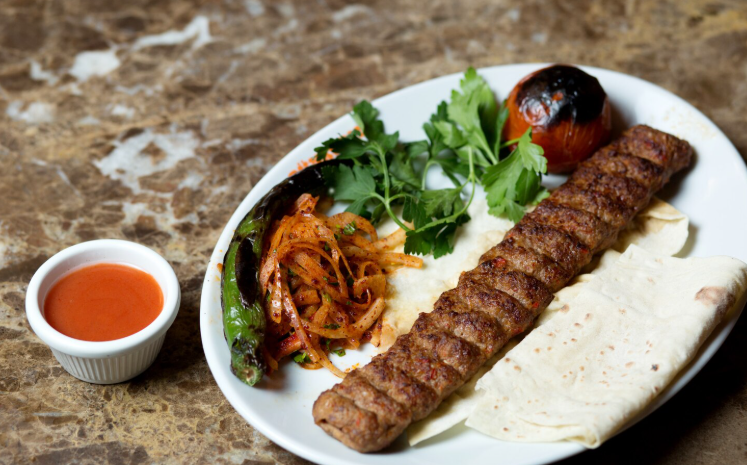
Kebabs are one of the most varied categories in Middle Eastern and Turkish cooking. The word kebab simply means meat cooked over fire, but it covers a huge range of preparations. Shish kebab is cubed meat grilled on a skewer. Köfte or kofta is ground meat mixed with spices and shaped onto a skewer or into patties. Adana kebab is a spicier version of ground meat kebab common in Turkish cuisine. Döner kebab is meat stacked on a vertical rotating spit and shaved off in thin slices, which is also the protein used in a gyro.
Gyro sandwiches are the wrap version of döner-style meat, typically lamb or chicken, served in flatbread with tomato, onion, and tzatziki or garlic sauce. They are casual, filling, and one of the most popular forms of Mediterranean street food. If you are looking for the best places for gyro and döner in SF, you are essentially looking for restaurants that take their meat preparation and bread quality seriously, since those two elements make or break the dish.
Shawarma is similar to döner in that it uses slow-cooked rotisserie meat, but the spice blend and serving style differ slightly. Shawarma tends to include warmer spices like allspice and cinnamon and is often served with garlic sauce, pickled vegetables, and fresh herbs in a flatbread or over rice.
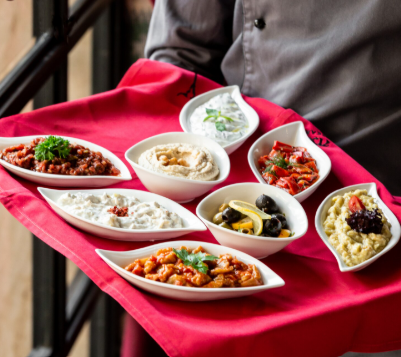
Mezze is a style of eating rather than a single dish. It refers to a spread of small dishes served together, similar to tapas. A mezze spread might include hummus, baba ghanoush, tabbouleh, olives, stuffed grape leaves, labneh, and fresh vegetables. Eating mezze is a social, relaxed way to experience a wide range of flavors and textures at once.
A few other dishes worth knowing as a beginner:
- Tabbouleh is a fresh salad made from bulgur wheat, finely chopped parsley, tomato, mint, lemon juice, and olive oil. It is light, bright, and very herbaceous.
- Baba ghanoush is a roasted eggplant dip similar in texture to hummus but with a smoky, slightly bitter depth that comes from charring the eggplant.
- Labneh is strained yogurt that has been thickened to a spreadable consistency. It is tangy and creamy and pairs well with olive oil and za’atar.
- Pita bread is the foundation that holds most of this cuisine together. Warm, fresh pita is soft, slightly chewy, and used to scoop dips, wrap meats, and soak up sauces.
What to Expect When You Eat at a Middle Eastern or Mediterranean Restaurant
The dining experience at a Turkish or Middle Eastern restaurant tends to be warm and unhurried. Meals are meant to be enjoyed slowly, especially when sharing mezze or a large platter with others. The food comes out in stages, and it is common to start with dips, salads, and bread before moving on to the main protein dishes.
If you are going for the first time, sharing dishes with the table is a great approach. Order one or two dips with pita, a fresh salad, and then a main dish each. That structure mirrors how the cuisine is traditionally eaten and gives you a chance to taste a range of flavors in one meal.
For anyone eating alone or grabbing a quick lunch, wraps and rice plates are the most practical options. A chicken döner or lamb gyro in a wrap with salad and sauce is a complete, satisfying meal that you can eat in ten minutes or take with you. Many of the best takeout Mediterranean food options in SF follow exactly this format.
Halal Mediterranean food in SF is widely available at Turkish and Middle Eastern restaurants, which is useful to know for diners who have dietary requirements around how their meat is sourced and prepared. Most restaurants that specialize in this cuisine follow halal standards and are usually transparent about it.
Finding Good Middle Eastern Food in San Francisco
San Francisco has a strong and diverse restaurant scene, and Bay Area eats span an impressive range of world cuisines. The city’s diners bring real curiosity and high standards, which rewards restaurants that take their food seriously.
Presidio Kebab Mediterranean Restaurant is one of the well-regarded spots in San Francisco for anyone exploring Turkish, Mediterranean, and Middle Eastern food. Located near the Presidio, the menu covers kebabs, hummus, warm pita, gyro sandwiches, Mediterranean platters, salads, and wraps. It is a good starting point for anyone new to this cuisine because the menu is broad enough to try several things at once.
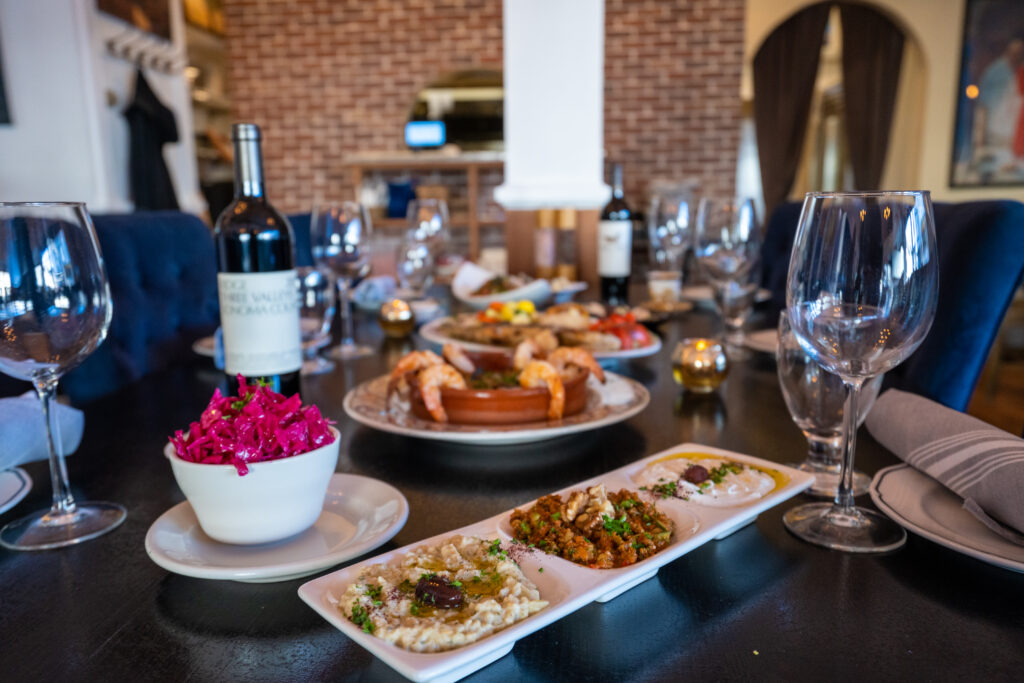
The restaurant suits a wide range of dining situations. Families looking for family-friendly restaurants in the Presidio will find the menu approachable for different ages and preferences. Groups of friends can share platters and mezze-style dishes. For anyone who wants the best takeout San Francisco has to offer in the Mediterranean category, the kebab plates and wraps are practical, filling, and hold up well after pickup.
Presidio Kebab Mediterranean Restaurant also works well as an introduction to gourmet Mediterranean dining for Bay Area foodies who are just getting into this food tradition. The flavors are genuine, the proteins are well-seasoned, and the combination of fresh ingredients and grilled meats gives a clear picture of why this cuisine has been eaten and loved for centuries.
Middle Eastern food rewards curiosity. The more you try, the more connections you start to see between the dishes, the spices, and the cultures that shaped them. Start with the classics, share everything you can with the people around you, and let the food do the work. That is how most people in this part of the world have always eaten it, and it is still the best way to experience it today.