
Greek Meals: Balanced Nutrition or Hidden Calories?
Greek food has a reputation for being healthy. You hear it all the time. Fresh ingredients, olive oil, grilled meats, lots of vegetables. And for the most part, that reputation is earned. But like any cuisine, Greek and broader Mediterranean food has a wide range of dishes, and some of them carry more calories than most people expect. The question is not whether Greek food is healthy or unhealthy across the board. The real question is which dishes give you balanced nutrition and which ones quietly add up in ways you might not notice.
This guide gives you an honest look at both sides. You will learn which Greek and Mediterranean dishes are genuinely nutritious, where the hidden calories tend to hide, and how to build a satisfying meal that works for your goals. Whether you are looking for healthy Mediterranean food in San Francisco, exploring Greek and Mediterranean restaurants near you, or just trying to understand what you are actually eating, this breakdown will help.
Why Greek and Mediterranean Food Has Earned Its Healthy Reputation
The Mediterranean diet, which includes Greek food as one of its core expressions, is one of the most studied eating patterns in nutrition science. Research has consistently connected it to lower rates of heart disease, better weight management, reduced inflammation, and longer life expectancy. That is not marketing. Those findings come from large-scale studies that tracked what real people ate over many years.
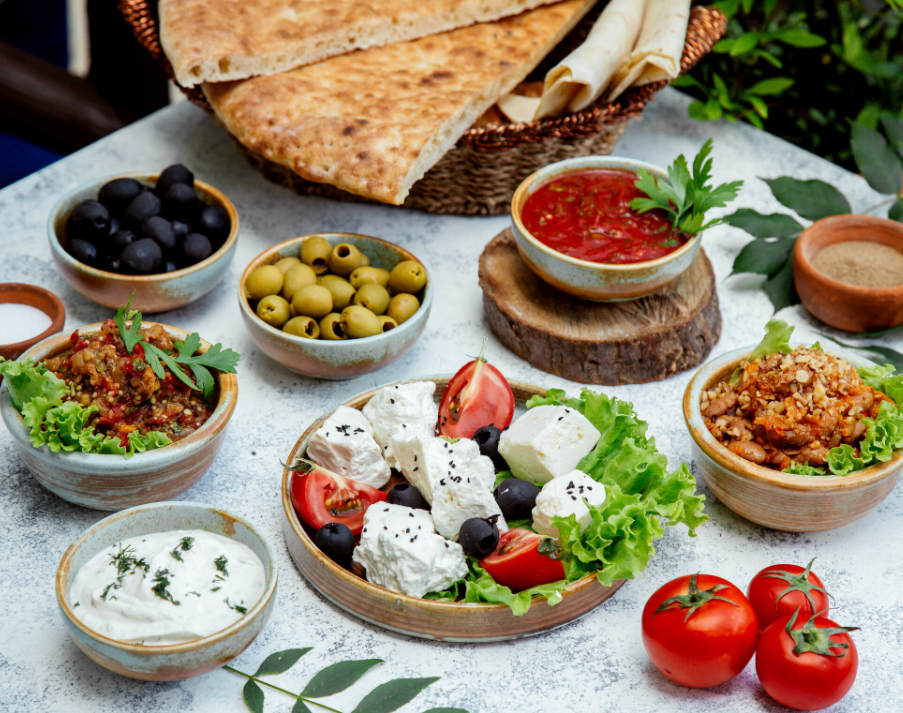
The reason Greek cuisine tends to support good health is not any single ingredient. It is the overall pattern. Olive oil replaces butter and processed fats. Vegetables and legumes take up more of the plate than they do in many Western diets. Grilled proteins like chicken and lamb are more common than fried or heavily sauced meats. Fresh herbs and spices do the flavor work instead of salt-heavy seasonings or cream-based sauces.
That pattern produces meals that are filling, nutrient-dense, and naturally lower in the kinds of fats and sugars that drive weight gain and chronic disease. A traditional Greek meal built around grilled fish, a village salad, hummus, and warm pita is a genuinely well-balanced plate. The macronutrients are in reasonable proportion, the fiber content is high from the vegetables and legumes, and the fat comes mostly from olive oil and lean protein rather than saturated sources.
Greek food also tends to use whole ingredients. You are not eating a lot of processed products or packaged components. A Greek salad is cucumbers, tomatoes, olives, red onion, and feta. A gyro is meat, bread, vegetables, and tzatziki. The ingredient lists are short, which is generally a good sign when it comes to nutritional quality.
This is part of why San Francisco’s food scene has embraced Mediterranean cuisine so warmly. Bay Area diners who care about what they eat have found that Greek and Mediterranean food delivers real flavor without requiring a compromise on quality or nutrition.
Where the Hidden Calories Actually Live
Here is where things get more honest. Greek cuisine has a healthy core, but it also has dishes that carry a much higher calorie load than most people realize. The issue is usually not the main protein or the vegetables. It is the preparation method, the portion size, or the extras that come alongside the dish.
Spanakopita, the spinach and feta pastry, is a good example. Spinach and feta are both nutritious ingredients. But the phyllo dough used to wrap them is layered with butter, and several sheets go into each piece. A single triangle of spanakopita can contain 250 to 350 calories, and it is easy to eat two or three at a table before the main course arrives.
Moussaka is another dish that looks lighter than it is. It is made from eggplant, ground meat, and a béchamel sauce on top. The eggplant itself is healthy, and the meat adds protein. But the béchamel, which is a cream and butter-based sauce thickened with flour, adds a significant amount of fat and calories to every serving. A full portion of moussaka can run between 500 and 700 calories depending on how it is made.
Tzatziki, the yogurt and cucumber sauce, is genuinely low in calories on its own. But it is almost always served with pita bread, and pita adds up quickly. One piece of pita is around 150 to 200 calories. Three pieces, which is easy to go through while dipping and talking at a table, brings the starter portion of a meal to 600 or 700 calories before the main course.
Fried options like loukoumades, calamari, or fried zucchini are crowd-pleasers, but the frying process changes the nutritional profile significantly. Calamari, for example, is a lean protein when grilled or served in a salad. Fried calamari in a full appetizer portion can be 400 to 600 calories, mostly from the batter and oil.
Portion size is the other factor that catches people off guard. Greek and Mediterranean restaurants tend to be generous. A kebab platter with rice, salad, pita, and sauce can be a completely balanced meal, but if the portions are large across all components, the total calorie count can exceed what most people expect from food that is considered healthy.
Here are the dishes where hidden calories most commonly show up:
- Pastries made with phyllo dough and butter, including spanakopita and tiropita
- Cream-based sauces on pasta or baked dishes like moussaka
- Fried appetizers where the protein itself is healthy but the preparation changes the calorie profile
- Large amounts of bread or pita consumed before or alongside the main meal
- Rich dips like taramasalata, which is made from fish roe and oil, and can be calorie-dense in larger portions
How to Order Greek and Mediterranean Food for Balanced Nutrition
The good news is that ordering well at a Greek or Mediterranean restaurant is not difficult. Most menus have plenty of options that are genuinely nutritious and satisfying. You just need to know what to prioritize.
Grilled proteins are your best anchor. A grilled chicken kebab, a lamb shish, or a chicken gyro built with fresh vegetables and a light yogurt sauce gives you lean protein, complex carbohydrates from the bread, and fiber from the vegetables. That combination keeps you full and provides real nutritional value without a lot of extra fat or sugar.
Salads in Greek cuisine are typically light and vegetable-forward. A classic Greek salad with tomato, cucumber, olive, red onion, and feta with olive oil and lemon is filling, low in calories relative to its volume, and high in vitamins and fiber. Ordering a salad as a starter instead of fried appetizers is one of the simplest ways to keep the meal balanced.
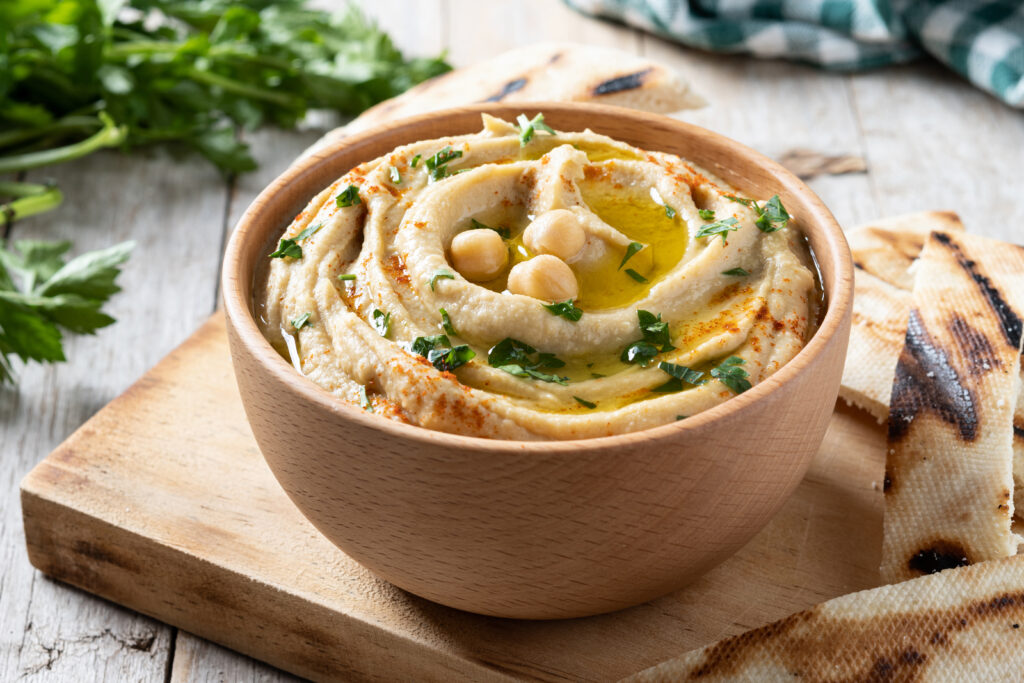
Hummus is a smart choice for a shared starter. Made from chickpeas, tahini, lemon, and olive oil, it is nutrient-dense and satisfying. Pair it with a moderate amount of pita rather than treating it as an unlimited bread-and-dip situation, and it works well as part of a balanced meal.
A few practical tips for ordering light at a Greek or Mediterranean restaurant:
- Choose grilled over fried wherever both options exist on the menu.
- Ask for sauce on the side so you can control how much you use.
- Share a mezze spread with the table instead of ordering individual fried starters.
- Build your plate around protein and vegetables, with a smaller portion of rice or bread on the side.
- Opt for yogurt-based sauces like tzatziki over cream or oil-heavy alternatives when given a choice.
Where to Experience Greek and Mediterranean Food in San Francisco
San Francisco has a strong selection of Mediterranean restaurants, and the city’s diners bring high expectations around both quality and nutrition. Anyone searching for Greek and Mediterranean restaurants near them in San Francisco or looking for the best Mediterranean restaurants in the city will find that the scene rewards careful exploration.
Presidio Kebab Mediterranean Restaurant near the Presidio covers a wide range of Turkish, Mediterranean, and Middle Eastern food, including many of the dishes discussed in this guide. The menu features grilled kebabs, gyro sandwiches, hummus, fresh salads, warm pita, and Mediterranean platters. It is a strong option for anyone who wants authentic flavors paired with the kind of ingredient-focused cooking that makes this cuisine genuinely good for you.
The restaurant works well across different dining situations. Families looking for family-friendly restaurants in the Presidio will find the menu broad enough to satisfy different preferences. People focused on healthy dining options in SF can build a well-balanced plate without much effort. For anyone who needs the best takeout Mediterranean food in SF on a busy weeknight, the grilled kebab plates and wraps are practical, satisfying, and hold up well after pickup.
Presidio Kebab Mediterranean Restaurant is also a natural choice for Bay Area foodies who appreciate food that is both made with care and genuinely nutritious. The overlap between delicious and healthy is wider in Mediterranean cuisine than almost anywhere else, and a well-chosen meal here demonstrates exactly that.
Greek and Mediterranean food is not automatically healthy or automatically calorie-heavy. It is a cuisine with real range, and the choices you make within it shape the outcome. Stick close to the grilled proteins, fresh salads, and legume-based dishes that anchor this food tradition, and you get one of the most balanced and satisfying ways to eat at a restaurant. Stray too far into the fried starters and cream-based dishes, and the calorie count climbs quickly. The good news is that the best-tasting options and the healthiest options in this cuisine almost always point in the same direction.