
Healthy Low-Calorie Turkish Dishes
Eating out and eating well at the same time is something a lot of people think is impossible. You either enjoy the meal or you watch what you eat. Turkish and Mediterranean food is one of the few cuisines where that trade-off mostly disappears. The food is naturally built around grilled proteins, fresh vegetables, legumes, and herbs, which means many of the most popular dishes on a Turkish menu are also some of the lightest and most nutritious options you can find at a restaurant.
If you are watching your calories but do not want to stare at a sad salad while everyone else eats, this guide is for you. Here is a real, practical look at the low-calorie Turkish foods worth ordering, what to skip, and how to build a satisfying meal that does not leave you feeling like you compromised on anything.
Why Turkish Food Is Already a Smart Choice for Lighter Eating
Before getting into specific dishes, it helps to understand why Turkish cuisine tends to be lower in calories compared to many other restaurant options. The cooking methods are a big part of it. Grilling, roasting, and simmering are the most common techniques used in Turkish cooking. Deep frying shows up occasionally but is not the dominant method the way it is in some other cuisines.
The ingredient list also matters. Turkish food leans heavily on lean proteins like chicken and lamb loin, plant-based proteins like chickpeas and lentils, and fresh vegetables that are seasoned with herbs and spices rather than heavy sauces. Olive oil is the main fat used, and while it is calorie-dense, it is used in moderate amounts and brings real nutritional value along with the flavor.
This is a big part of why healthy Mediterranean food in San Francisco has become so popular. Diners who want food that is both satisfying and aligned with health goals have figured out that Turkish and Mediterranean cuisine delivers both without much effort. The flavors are bold, the portions tend to be generous, and the calorie counts on many dishes are genuinely reasonable.
That said, not every item on a Turkish menu is light. Some dishes are rich, butter-heavy, or fried. Knowing which ones to order and which ones to save for a cheat day makes a real difference.
The Best Low-Calorie Turkish Dishes to Order
These are the dishes that give you the most flavor and satisfaction for the fewest calories. Most of them are staples at any good Turkish or Mediterranean restaurant, and they are filling enough to make a complete meal.
Grilled chicken kebab is one of the best choices you can make. Chicken breast or thigh marinated in spices and grilled over an open flame is high in protein and relatively low in fat, especially when it is served without heavy sauce. A typical grilled chicken kebab plate with a side salad and a small amount of rice comes in well under 600 calories and keeps you full for hours.
Shish kebab made with lean cuts of lamb or beef is another strong option. The key word is lean. When the meat is trimmed properly and cooked on a skewer over a grill, the fat drips away during cooking. What you get is a protein-forward dish with a lot of flavor and a calorie count that works for most dietary goals.
Hummus often surprises people because it seems indulgent. It is creamy, rich-tasting, and deeply satisfying. But a standard serving of hummus with warm pita is around 200 to 300 calories depending on the portion size. The chickpeas and tahini that make up most of the dish are nutrient-dense, meaning you get fiber, plant protein, and healthy fat alongside the calories. Paired with raw vegetables instead of a full portion of pita, it becomes an even lighter option.
Turkish salads are built differently from Western salads. They are not heavy on cheese, croutons, or creamy dressing. A traditional Turkish salad is usually cucumber, tomato, parsley, red onion, and sumac with a light lemon and olive oil dressing. That combination is filling, hydrating, and very low in calories. It also pairs well with almost anything else on the menu.
Cacik is a cold yogurt dip made with cucumber, garlic, and dried mint. It is similar to tzatziki in Greek food. A serving is usually under 100 calories and works as a side dish, a dip, or a sauce over grilled meat. It adds creaminess to a plate without the calorie cost of heavier sauces.
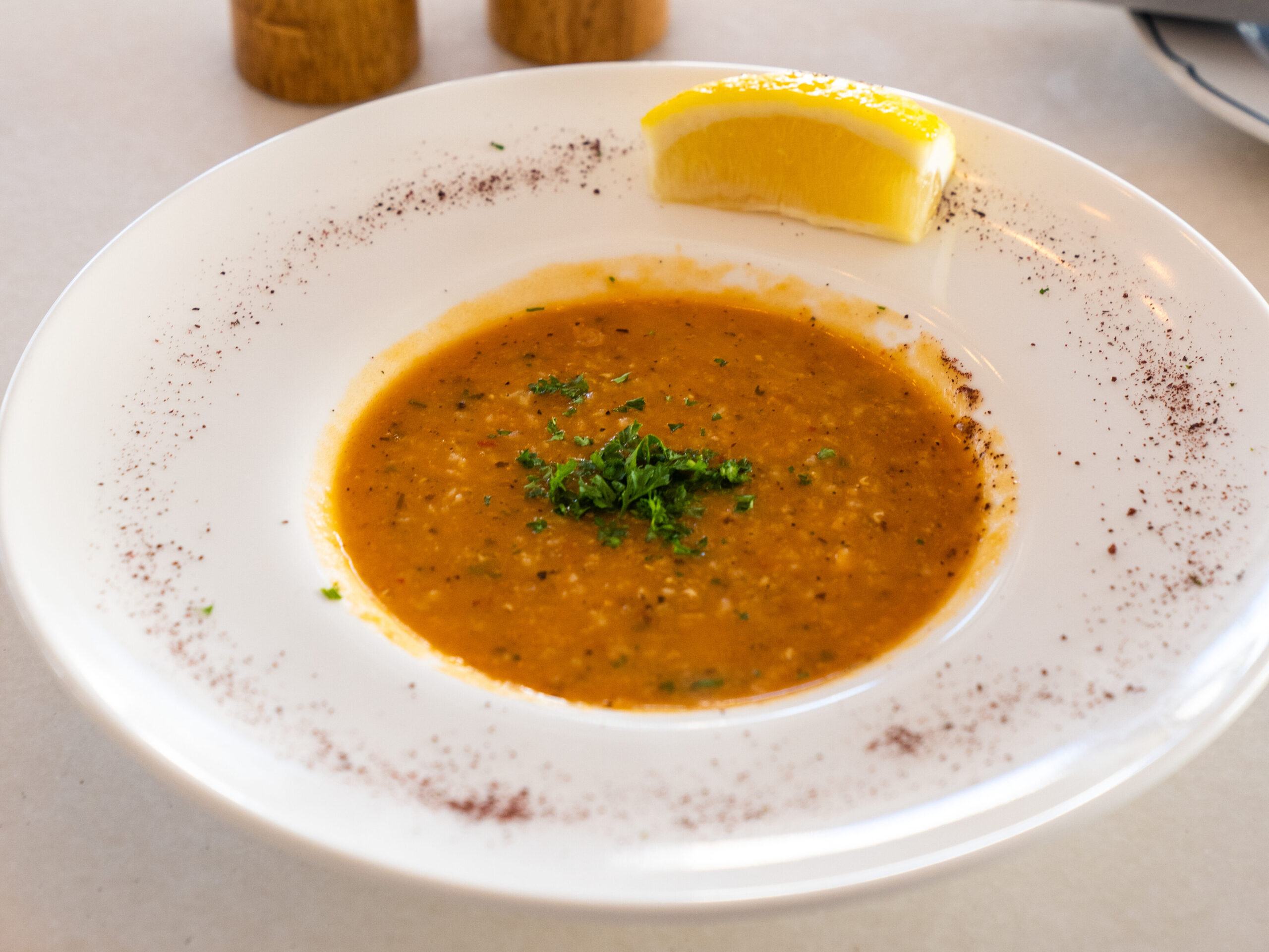
Lentil soup, called mercimek çorbası in Turkish, is one of the most underrated dishes on any Turkish menu. It is made from red lentils, onion, cumin, and a little butter or olive oil. A full bowl is typically around 180 to 220 calories and is genuinely satisfying because of the fiber and protein content of the lentils. It is a great starter that takes the edge off hunger before the main course arrives.
Here are a few more options worth ordering when you want to keep things lighter:
- Chicken döner served in a bowl with salad and a small amount of rice rather than wrapped in bread keeps the calorie count lower while still delivering the full flavor of the dish.
- Grilled vegetables as a side dish add volume and nutrition to any plate without many calories at all.
- Ezme, a spicy tomato and herb salad, is almost zero calories and full of flavor. It works as a dip, a condiment, or a light starter.
What to Watch Out For and How to Order Smart
Not everything on a Turkish menu is light, and a few items can push the calorie count up faster than expected. Knowing what to be aware of helps you make better choices without overthinking every decision.
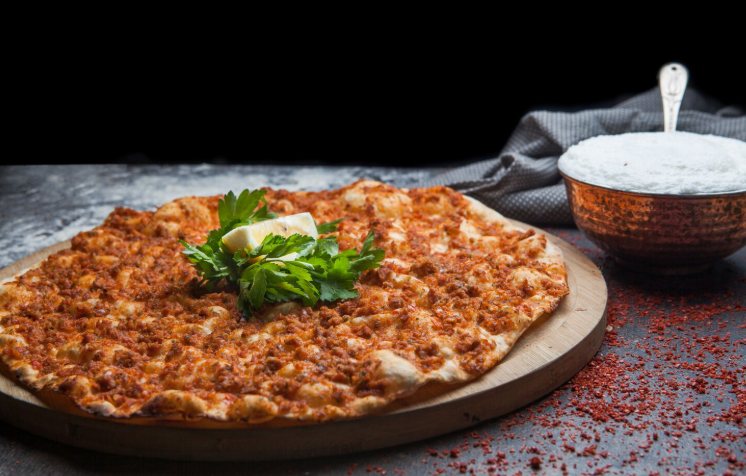
Lahmacun, sometimes called Turkish pizza, is a thin flatbread topped with spiced minced meat. One piece is not particularly high in calories, but it is easy to eat several at once. If you are watching your intake, one piece as a starter works well. Two or three as a main course adds up quickly.
Börek is a flaky pastry made with thin dough, butter, and a filling of cheese, spinach, or meat. It is delicious, but the dough and butter make it one of the higher-calorie options on most menus. An occasional treat is fine, but it is not the dish to order when you are trying to eat light.
Bread and pita on the table before the meal can add a few hundred calories before the food even arrives. If you are trying to manage your intake, asking for extra vegetables or hummus to snack on instead of loading up on bread is a simple swap that makes a real difference.
Rice and bulgur are common sides on Turkish platters and are not particularly high in calories, but portion size matters. Asking for a smaller portion of rice and more salad or grilled vegetables is an easy way to keep the overall meal lighter without feeling restricted.
The general rule for ordering light at a Turkish or Mediterranean restaurant is to build your plate around a grilled protein, add a fresh salad, and use dips like hummus or cacik as your fat source instead of sauces or extra bread.
Eating Well in San Francisco’s Turkish and Mediterranean Restaurants
San Francisco has a strong culture around healthy eating, and the city’s restaurant scene reflects that. When people search for healthy dining options in SF or look for Mediterranean cuisine near them in San Francisco, they are often looking for exactly the kind of food described in this guide. Food that tastes like a real meal, not a compromise.
Presidio Kebab Mediterranean Restaurant is a well-regarded spot for anyone looking for authentic Turkish food in San Francisco that also happens to be good for you. The menu covers grilled kebabs, hummus, fresh salads, wraps, and Mediterranean platters. Most of what makes the menu interesting also happens to be some of the lighter, more nutritious food in the city.
It works well for a wide range of diners. People who are eating carefully can build a genuinely satisfying plate around grilled chicken, salad, and hummus. Families looking for family-friendly restaurants in the Presidio will find that the menu has options for different preferences and appetites. For anyone who relies on best takeout Mediterranean food in SF to get through a busy weeknight, the dishes that travel best also happen to be among the healthier ones. Rice plates, kebab bowls, and hummus containers hold up well and taste good at home.
Bay Area foodies who appreciate food that is both well-made and nutritionally sound will find a lot to like here. Turkish and Mediterranean cuisine is one of the few places where the most popular dishes and the healthiest dishes overlap almost completely.
Eating low-calorie does not mean eating less food or less flavor. In Turkish cuisine, it means ordering the things this food has always done best: fresh ingredients, clean cooking methods, bold spices, and meals that leave you satisfied rather than stuffed. That is a good deal no matter how you look at it.