
What Is Turkish Delight?
If you have ever wondered what Turkish delight actually is, you are not alone. Whether you heard the name in a movie, spotted it on a dessert menu, or saw it in a candy shop, this sweet treat has a way of sparking curiosity. It is one of the oldest confections in the world, and once you understand what it is, where it comes from, and how it fits into the larger story of Turkish and Mediterranean food culture, it starts to make a lot more sense.
This guide covers everything you want to know about Turkish delight, including what it is made of, how it tastes, where it comes from, and how it connects to the warm, flavor-rich dining experience you can find at a place like Presidio Kebab Mediterranean Restaurant in San Francisco.
What Is Turkish Delight, Exactly?
Turkish delight is a soft, chewy candy made from a base of starch and sugar. The Turkish name for it is lokum, and it has been made in Turkey for hundreds of years. The texture is somewhere between a gummy candy and a soft gel. It is tender enough to cut with a knife but firm enough to hold its shape. Most pieces are dusted in powdered sugar or shredded coconut to keep them from sticking together.
The flavor can vary a lot. Classic versions are made with rosewater, giving them a floral, lightly sweet taste that is very different from anything you might find in Western candy. Other popular flavors include lemon, orange, mint, pomegranate, and pistachio. Some versions are made with nuts like pistachios or hazelnuts pressed inside, adding a little crunch to the soft chew.
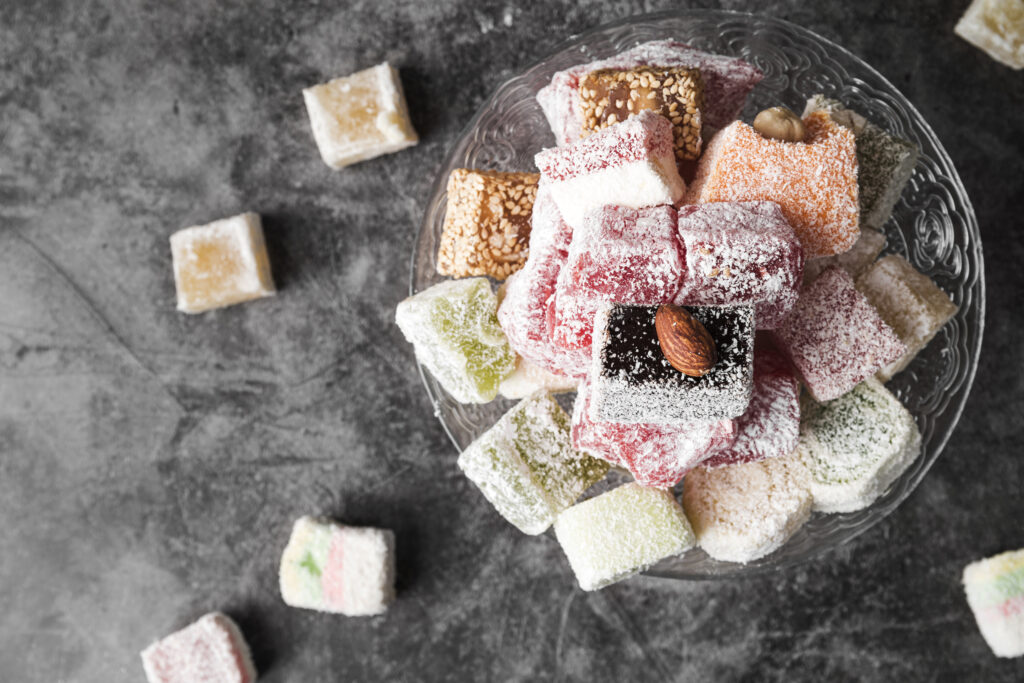
The ingredients are simple. You need sugar, water, cornstarch, and cream of tartar to get the base right. After that, the flavoring is added and the mixture is poured into molds to set. Once it firms up, it gets cut into small squares and coated. That is the basic process, though traditional makers often take great pride in the slow cooking and careful technique involved.
Where Does Turkish Delight Come From?
Lokum dates back to at least the 1700s in Istanbul, which was the heart of the Ottoman Empire. Some food historians believe versions of it were made even earlier. The candy became popular across the empire and eventually made its way to Europe in the 1800s. British travelers who encountered it in Istanbul brought it back home, where it got the name “Turkish delight.”
It became well known in Western culture partly because of literature. C.S. Lewis featured it in “The Lion, the Witch and the Wardrobe,” where the White Witch uses enchanted Turkish delight to tempt one of the main characters. That moment in the story helped make the candy famous to generations of readers worldwide.
In Turkey today, lokum is still very much a part of daily life. It is served with Turkish tea and coffee, given as a gift, sold in beautiful boxes at markets, and enjoyed during holidays and celebrations. High-quality lokum from reputable shops in Istanbul is considered something special, made fresh and eaten within a few weeks.
How Does It Taste?
The taste depends heavily on the flavor. Rosewater lokum has a gentle, perfumed sweetness that is subtle rather than bold. If you have never tasted rosewater, it has a light floral quality that is hard to compare to anything else. Citrus versions are brighter and more familiar. Pistachio-filled pieces add a slightly savory, nutty contrast to the sugar.
One thing most people notice right away is that Turkish delight is not as intensely sweet as many Western candies. The sweetness is there, but it is balanced. The chewiness also makes you slow down and really taste it. It is the kind of treat that pairs well with bitter drinks, which is exactly why it is so often served alongside strong Turkish tea or a small cup of thick Turkish coffee.
Turkish Delight and the Broader World of Mediterranean Food
Turkish delight is just one part of a much larger food tradition. Turkish and Mediterranean cuisine as a whole is known for being deeply flavorful, ingredient-forward, and rooted in centuries of cooking tradition. The same culture that gave the world lokum also gave us kebabs, hummus, warm pita bread, mezze spreads, and an endless variety of grilled meats and fresh vegetables.
Mediterranean food is popular for good reason. It tends to be on the healthier side, built around fresh produce, olive oil, lean proteins, legumes, and herbs. If you are looking for healthy dining options in San Francisco, Mediterranean cuisine is one of the strongest choices you can make. The flavors are bold without being heavy, and the ingredients are generally wholesome.
When people search for the best Mediterranean restaurants in San Francisco or wonder where to find authentic Turkish food in the city, they are often drawn to places that take this food seriously. Presidio Kebab Mediterranean Restaurant is exactly that kind of spot. It sits in the Presidio area and serves a menu that covers Turkish kebabs, Mediterranean platters, hummus, fresh salads, wraps, and warm pita. It is one of the top-rated options for anyone exploring Turkish and Mediterranean food in the Bay Area.
What to Eat at a Turkish and Mediterranean Restaurant
If you are new to this cuisine, knowing what to order can make the experience a lot more enjoyable. Here are some things that tend to be popular:
- Kebabs come in many forms. Lamb, chicken, and beef are all common. They can be grilled on a skewer, pressed into a flat blade, or sliced thin like a döner or gyro.
- Hummus is a creamy dip made from blended chickpeas, tahini, lemon, and garlic. It is almost always served with warm pita.
- Wraps are a great option if you want something satisfying but easy to eat. Gyro sandwiches and döner kebab wraps are both popular choices.
- Salads in Mediterranean cuisine often include fresh cucumber, tomato, parsley, and a simple lemon and olive oil dressing. They are light and refreshing.
- Mezze platters let you try several small dishes at once, which is a great way to get a feel for the range of flavors.
For anyone looking for the best places to get gyro and döner in SF, or searching for grilled kebabs in San Francisco, Presidio Kebab Mediterranean Restaurant is a consistently recommended option. The food is fresh, the portions are generous, and the menu works well for a wide range of diners.
Who Is This Kind of Restaurant Good For?
Mediterranean restaurants work well for almost every type of dining occasion. They tend to be casual enough for a quick lunch but flavorful enough that they feel like a real meal. Here is a quick look at who tends to enjoy this type of spot:
- Families with kids will find plenty of approachable, non-spicy options on most Mediterranean menus.
- Friends getting together for a casual meal can share plates and try a variety of dishes.
- Anyone eating alone can easily order a wrap or a platter without feeling out of place.
- Date nights work well here too, especially when the food is interesting and the vibe is relaxed.
- People who want healthy Mediterranean food in San Francisco will find that the menu leans toward grilled proteins and fresh vegetables rather than heavy, fried dishes.
For takeout, Mediterranean food travels well. Wraps, rice plates, and hummus containers hold up nicely, which makes Presidio Kebab a solid choice for best takeout San Francisco searches or anyone needing a reliable Mediterranean food delivery option in SF.
A Few Tips for Getting the Most Out of Your Visit
If you are heading to a Turkish or Mediterranean restaurant for the first time, a few things are worth keeping in mind. Ask about the daily specials, since many spots rotate what they make fresh. If you enjoy bold flavors, do not skip the garlic or herb sauces that often come alongside kebabs and platters. Try the tea or a traditional drink if it is offered.
For takeout, calling ahead or ordering online is usually the fastest route. Most Bay Area Mediterranean restaurants handle takeout orders efficiently, and the food stays good for the drive home.
San Francisco has a strong food culture, and the city’s diners tend to appreciate places that take their ingredients and preparation seriously. That is why spots like Presidio Kebab Mediterranean Restaurant have built a loyal following among Bay Area foodies and anyone in search of genuine, well-made Turkish and Mediterranean food.
Turkish delight may have been what brought you here, but Mediterranean cuisine has a way of keeping people coming back. Whether you are a longtime fan of kebabs and hummus or just getting started with this part of the food world, there is a lot to enjoy. The next time you are searching for Bay Area eats with real flavor and history behind them, this is a corner of the culinary world very much worth getting to know.