
Fresh Herbs: The Heart of Turkish Cuisine
There is a moment at a well-made Turkish meal where something bright and clean cuts through the richness of the grilled meat, the earthiness of the spices, and the creaminess of the dips. That moment is almost always herbs doing their job. Fresh parsley scattered over a kebab plate, dried mint stirred into yogurt, chopped dill folded into a cold salad, fresh mint layered into a wrap alongside grilled lamb. Herbs in Turkish cuisine are not a garnish placed on a plate to make it look nice before being pushed to the side. They are a structural part of the flavor, present in almost every dish and doing real work at every stage of the meal.
This is one of the things that separates Turkish food from many other cuisines. The herb tradition here is deep, intentional, and built into the cooking at a fundamental level. Understanding which herbs define Turkish cuisine, how they are used, and why they matter so much helps you taste the food more clearly and appreciate what makes it so consistently satisfying. It also gives you a better sense of what to look for when you are searching for authentic Turkish food in San Francisco or exploring Mediterranean cuisine for the first time.
Why Herbs Matter So Much in Turkish Cooking
The role of herbs in Turkish cuisine comes from both geography and philosophy. Turkey has a climate that supports a wide variety of fresh herbs year-round, and the country’s agricultural traditions have always treated herbs as everyday ingredients rather than specialty items. Parsley, mint, dill, and thyme grow abundantly across different regions of the country, and home cooks as well as professional kitchens have incorporated them into daily cooking for generations.
The cooking philosophy behind Turkish food also helps explain the prominence of herbs. Turkish cuisine is built on balance. Grilled meats are rich and savory. Spice blends add warmth and depth. Legume-based dips like hummus are creamy and dense. Flatbreads are starchy and filling. Without something bright, clean, and slightly bitter or sweet to cut through all of that richness, the food would feel heavy. Fresh herbs solve that problem elegantly. They add a top note to the flavor profile that makes everything underneath taste more vivid by contrast.
The Ottoman palace kitchen tradition also contributed to the sophisticated use of herbs in Turkish cooking. The chefs who worked in those kitchens over hundreds of years developed detailed knowledge of which herbs paired with which proteins, which dried herbs held up better in cooked applications versus fresh, and how to layer herb flavors across different components of a meal. That accumulated knowledge filtered into the broader Turkish food culture and is still reflected in how the cuisine uses herbs today.
Dried herbs deserve a specific mention here because Turkish cooking uses them differently and more intentionally than most Western cuisines. Dried mint in particular is used as a primary flavoring ingredient rather than a substitute for fresh mint when the fresh version is unavailable. The drying process concentrates certain flavor compounds and changes the character of the herb in ways that make it better suited for specific applications. Turkish cooks understand this and use fresh and dried herbs as distinct ingredients with different roles rather than treating them as interchangeable.
The Herbs That Define Turkish Flavor
These are the herbs that show up most consistently across Turkish cooking and have the most significant impact on the finished flavor of the food.
Parsley is the most widely used fresh herb in Turkish cuisine. Flat-leaf parsley, not the curly variety, gets chopped and scattered over kebab plates, stirred into salads, mixed into köfte and other ground meat preparations, and used as a base for dishes like tabbouleh. Parsley has a clean, slightly peppery, vegetal flavor that contrasts well with the richness of grilled meat and the warmth of spices. It also adds color to a plate, which is part of why it appears so consistently as a finishing touch on Turkish dishes.
Mint appears in both fresh and dried forms across Turkish cooking, and both versions are important. Fresh mint gets layered into wraps, added to cold salads, and served alongside grilled meats as part of a mezze spread. The fresh version has a cool, bright, slightly sweet quality that works especially well alongside lamb, which has a richness that benefits from that kind of contrast.
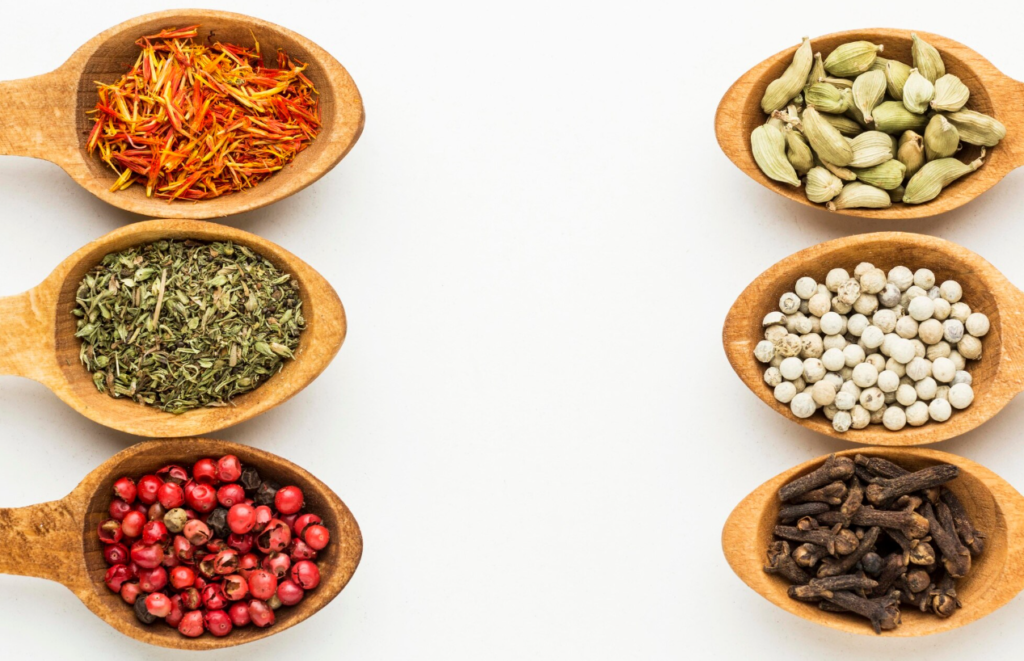
Dried mint, called nane in Turkish, gets stirred into cacik, the yogurt and cucumber dip, drizzled over lentil soup as a finishing spice, and mixed into herb fillings for börek and stuffed vegetables. The dried version has a more concentrated, slightly earthier character that holds up in cooked and warm dishes where fresh mint would lose its brightness.
Dill is common across Turkish and broader Mediterranean cooking and has a distinctly anise-like, slightly sweet flavor that sets it apart from the other herbs in this tradition. It appears in cold yogurt dips, fish dishes, stuffed grape leaves, and certain rice preparations. Dill works particularly well with yogurt-based dishes because its delicate sweetness complements the tanginess of the dairy without competing with it.
Thyme, both fresh and dried, appears in various Turkish preparations and is especially common in dishes that draw from Aegean and coastal regional cooking traditions. It has a warm, slightly woody flavor that works well in slow-cooked meat dishes, roasted vegetable preparations, and herb blends like za’atar. In za’atar, which is one of the defining flavor blends of Turkish and Middle Eastern cuisine, thyme is the primary herb component, combined with sumac, sesame seeds, and salt into a blend that gets stirred into olive oil, spread on warm flatbread, and used as a rub for meats and vegetables.
Oregano is more associated with Greek food than Turkish cooking, but it appears in Turkish cuisine as well, particularly in dishes that have Aegean and Balkan influences. It has a bolder, more pungent quality than thyme and works well in marinades for grilled meats and certain roasted vegetable dishes.
Bay leaf appears in slow-cooked stews, rice dishes, and braised meat preparations. It does not add a flavor you can easily isolate, but its absence from a long-cooked dish is noticeable. Bay leaf contributes a subtle herbal depth that rounds out the overall flavor of a dish without asserting itself.
Here are a few more herbs that show up less often but are worth knowing:
- Basil appears in some regional Turkish dishes, particularly in areas with Italian or Levantine culinary influence, and adds a sweet, slightly spicy freshness to salads and cold preparations.
- Sage gets used in some Anatolian regional cooking, typically in meat preparations and certain stuffing recipes.
- Rosemary, while more common in Greek and Italian cooking, occasionally appears in Turkish lamb dishes and roasted meat preparations where a more assertive herbal flavor is wanted.
How Herbs Show Up in Turkish Dishes You Already Know
The way herbs function in specific dishes is where their importance becomes most clear. Looking at a few familiar Turkish foods through the lens of herb use shows how central these ingredients actually are.
A properly made lamb gyro or döner kebab is not just meat and bread. The fresh parsley and mint that get layered in alongside the meat, the sumac-dusted onions, and the yogurt sauce are doing as much for the final flavor as the spiced protein itself. The herbs provide the brightness that keeps each bite from feeling heavy. Without them, the same meat and bread would taste flat and one-dimensional by comparison.
Hummus at its best gets finished with a drizzle of good olive oil and a sprinkle of fresh herbs or spice. The creamy chickpea base needs something to give it a clean, fresh note on top, and chopped parsley or dried mint fulfills that role. The herbs make the dip taste alive rather than static.
Tabbouleh, which appears across Turkish and broader Middle Eastern menus, is essentially a fresh herb salad with bulgur rather than the other way around. The parsley is the dominant ingredient by volume. The herb is the dish. That single fact communicates more about the role of herbs in this food tradition than any general description can.
Cacik, the cold yogurt dip made with cucumber and dried mint, uses herb as its primary flavoring. The mint is not an accent. It is the flavor that defines the dish and makes it taste like something specific rather than just spiced yogurt.
Finding Great Herb-Forward Turkish Food in San Francisco
Herb freshness and quality make a real difference in Turkish food, and restaurants that take this seriously produce noticeably better results than those that treat herbs as an afterthought. Bay Area foodies who pay attention to what is on the plate will notice the difference immediately.
Presidio Kebab Mediterranean Restaurant near the Presidio is a well-regarded spot for Turkish and Mediterranean dining in San Francisco. The food here reflects the herb traditions described in this guide, with fresh parsley, mint, and dill appearing across the menu in grilled kebabs, Mediterranean platters, hummus, warm pita, wraps, and fresh salads. It is one of the better options for anyone searching for the best Mediterranean restaurants in San Francisco who also cares about the quality and freshness of the ingredients involved.
The restaurant works well across different dining situations. Families looking for family-friendly restaurants in the Presidio will find a broad menu with approachable flavors. Anyone who wants healthy Mediterranean food in San Francisco that is both light and genuinely satisfying will find that the herb-forward cooking style here supports both goals naturally. For best takeout Mediterranean food in SF, the dishes hold their flavor well, and the fresh herb elements travel better than most people expect.
Presidio Kebab Mediterranean Restaurant is also a natural choice for anyone who wants to dine local in San Francisco and experience a food tradition that has used fresh herbs as a foundational ingredient for a very long time.
Fresh herbs are one of those ingredients that elevate everything around them without announcing themselves loudly. In Turkish cuisine, they are not optional and they are not decorative. They are part of why the food tastes the way it does, and once you start noticing them, you will find them everywhere in this cuisine, doing their quiet, essential work in every single dish.