
What Is Falafel and How Is It Made?
Falafel is one of those foods that people recognize immediately but often know very little about beyond the fact that it is crispy, round, and found at Mediterranean restaurants. You have probably eaten it at some point, maybe tucked into a wrap with tahini sauce, or served on a plate alongside hummus and warm pita. You know it tastes good. You might even know it is vegetarian. But the full story of what falafel actually is, where it comes from, how it gets made, and why it has become one of the most beloved street foods in the world is something most people have never fully explored.
That story is worth knowing. Falafel is not just a food. It is a window into thousands of years of Middle Eastern culinary tradition, a product of ingredients that have sustained entire civilizations, and a dish that has traveled from its origins across the globe while somehow staying true to its fundamental character. Whether you eat it in Cairo, Beirut, Tel Aviv, Istanbul, or San Francisco, the best falafel shares a set of qualities that have not changed much in a very long time. This guide explains all of it, from the raw ingredients to the finished bite, and why this particular food has earned such a devoted following everywhere it has landed.
Where Falafel Comes From
The origin is genuinely debated, and the debate itself tells you something about how deeply this food is woven into the cultural fabric of the Middle East. Egypt makes a strong historical claim. The Egyptian version of falafel, called ta’amiya, is made from dried fava beans rather than chickpeas and has been made in Egypt for a very long time, with some food historians tracing it back to the Coptic Christian community who needed protein-rich foods during religious fasting periods when meat was not allowed. The fava bean version is denser, earthier, and quite different in flavor from the chickpea version that most people outside Egypt encounter.
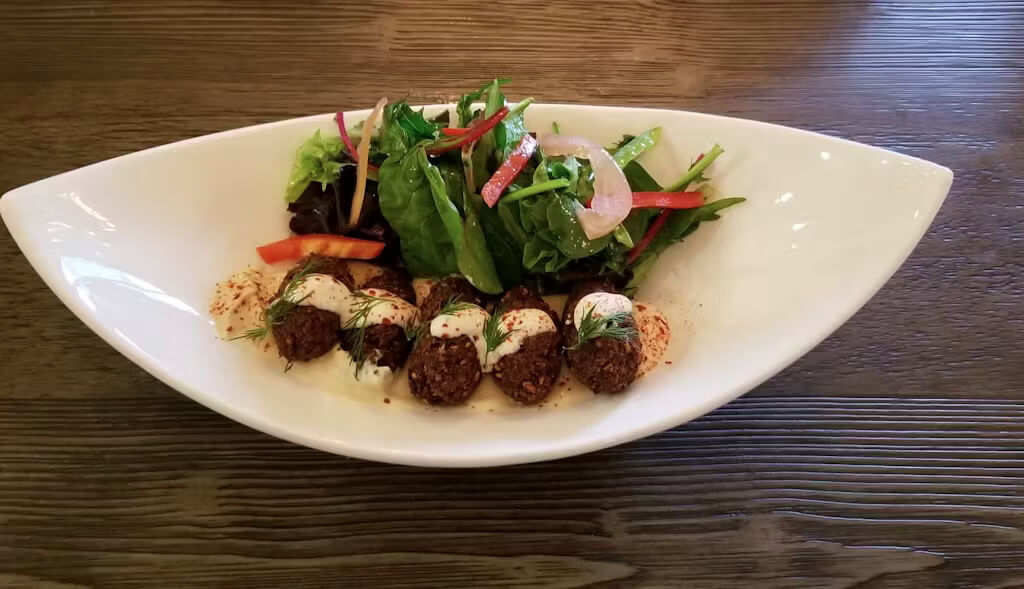
The Levantine version, made from chickpeas and widely eaten across Lebanon, Syria, Jordan, Palestine, and Israel, is the style that spread most globally and became the default version in most of the world outside Egypt. How chickpeas replaced fava beans in the Levantine tradition and exactly when this happened is not entirely clear, but by the time falafel became a street food staple across the broader Middle East, the chickpea version was the dominant one. From the Levant, it spread with waves of migration and cultural exchange into Turkey and throughout the Eastern Mediterranean, becoming part of the broader Mediterranean cuisine landscape that includes Turkish food, Greek food, and the full range of Middle Eastern cooking traditions.
In the United States, falafel arrived primarily through Middle Eastern immigrant communities in the 20th century and became widely popular in cities with strong Jewish, Lebanese, and Arab communities. San Francisco was one of the early cities where Mediterranean and Middle Eastern food developed a strong following, and falafel has been part of Bay Area food culture for decades. Today it appears on menus across the city, from dedicated falafel stands to full-service Mediterranean restaurants that serve it as part of a broader menu of Turkish food, kebabs, gyro sandwiches, and mezze dishes.
What Falafel Is Made From and Why the Ingredients Matter
The ingredient list for falafel is short, which makes the quality and preparation of each component that much more important. At its core, it is dried legumes, fresh herbs, aromatics, and spices ground together and fried. But the details within that simple description are what separate exceptional falafel from mediocre, and understanding those details gives you a much better sense of what to look for and what to ask for when you are ordering.
The legume is the foundation. In the chickpea version, which is what this guide focuses on, dried chickpeas are used rather than canned or cooked ones. This is one of the most important and most frequently violated rules of good falafel making. Dried chickpeas get soaked in cold water for at least eight hours and sometimes up to twenty-four hours. During that soaking time, they absorb water and swell up significantly, but they do not cook.
They remain raw inside, softened from the soaking but with a firm, starchy interior. When these soaked raw chickpeas get ground, they produce a coarse, slightly grainy mixture with a high starch content that binds the falafel together during frying without needing any egg or flour. The starch gelatinizes in the hot oil and creates a crust that is genuinely crispy while the interior stays soft and slightly dense.
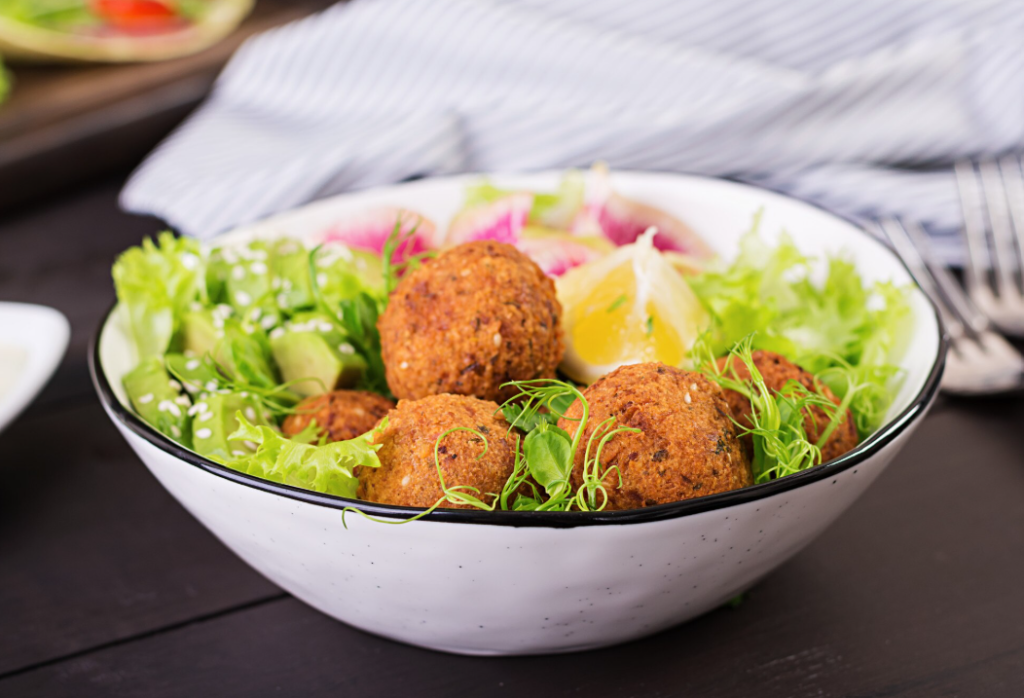
When people use canned chickpeas, which are already fully cooked, the starch has already been gelatinized by the cooking process. The mixture becomes wet and soft, does not bind properly, and produces falafel that is either too dense, falls apart in the oil, or needs flour and egg as binders just to hold together. The texture is fundamentally different, and experienced falafel eaters can tell immediately. Good one made from soaked raw chickpeas has a specific interior texture that is slightly grainy and earthy rather than smooth and uniform. That texture is part of what makes it satisfying.
Fresh herbs are the second defining ingredient. Flat-leaf parsley and cilantro are the most common, though the ratio between them varies by region and by cook. Some recipes use all parsley for a cleaner, slightly peppery flavor. Some use all cilantro for a more assertive, citrusy character. Many use a combination that lands somewhere between the two. The herbs go into the grinder with the raw chickpeas and become fully incorporated into the mixture, turning it a deep green color that you see in cross-section when a good falafel is split open. That green interior is a visual signal that it was made from scratch with real fresh herbs rather than a pre-made mix.
Aromatics play an important supporting role. Garlic and onion go into virtually every falafel recipe, providing the savory, pungent backbone that keeps the flavor from being flat. Some recipes add a small amount of leek or scallion instead of or in addition to onion, which gives a slightly milder, more delicate flavor. The garlic is used raw, which means its intensity gets partially mellowed during frying but never fully disappears. A falafel without enough garlic tastes incomplete.
The spice blend is where regional and personal variation shows up most clearly. Cumin is the most consistent spice across virtually all falafel traditions. It provides the warm, earthy depth that makes falafel taste like falafel rather than just a fried chickpea cake. Coriander seed, either in addition to or instead of fresh cilantro, is common in many recipes and adds a citrusy, slightly floral note. Red pepper flakes or cayenne appear in versions that want more heat.
Some recipes include a small amount of cardamom, which gives the falafel a subtle warmth that is distinctly Middle Eastern in character. Black pepper and salt round everything out. The exact proportions are where every cook puts their own stamp on the dish.
Baking soda, used in a very small amount, is often added just before frying. It serves a specific purpose: it creates tiny air bubbles in the mixture as it reacts with the heat and moisture of the oil, which makes the interior lighter and the exterior crispier than it would be without it. Using too much produces a bitter, soapy flavor. Using the right amount, typically less than half a teaspoon for a batch that serves four to six people, produces falafel with an interior that is light rather than dense.
How Falafel Is Shaped and Fried
Once the mixture is prepared, falafel gets shaped either by hand or with a tool called a falafel scoop, which is specifically designed to release the mixture in a uniform disc or oval shape. The hand-formed ball is the most classic shape, and the disc produced by the scoop is the most common in commercial and restaurant settings because it cooks more evenly. The shape affects the surface area, and more surface area means more crust, which most falafel eaters prefer.
The oil temperature is one of the most critical variables in falafel frying. The oil needs to be between 350 and 375 degrees Fahrenheit. Below that range, the falafel absorbs oil rather than crisping, producing a greasy result that misses the textural contrast that makes good falafel so appealing. Above that range, the exterior browns too quickly while the interior stays raw. At the right temperature, the falafel goes into the oil and immediately begins to sizzle vigorously. It takes roughly three to four minutes to develop a deep brown crust on all sides while the interior cooks through to a soft, slightly dense texture that holds together when bitten into.
Fresh falafel straight from the oil is a genuinely different product from falafel that has been sitting for twenty minutes. The crust is at its crispiest in the first few minutes after frying. The interior is at its most tender and flavorful immediately after cooking. This is why falafel at a restaurant or street stand where it is made continuously throughout service tastes so much better than falafel that was made in batches and held for extended periods. When you eat falafel that is hot, fresh, and just out of the oil, you understand why people have been eating this food for hundreds of years.
How Falafel Is Served and What It Pairs With
Falafel gets served in a few classic ways that have become standard across the Mediterranean and Middle Eastern food world, though regional variations exist everywhere.
The most common presentation in a restaurant setting is as part of a mezze spread or a platter. Several falafel pieces get arranged alongside hummus, tahini sauce, fresh vegetables, pickled turnips, and warm pita or flatbread. This format lets you eat the falafel as you like, dipped into the hummus, wrapped in pita with tahini and vegetables, or eaten on their own with just a squeeze of lemon. The hummus and tahini both pair naturally with falafel because they share the chickpea or sesame base, which creates a flavor harmony that feels seamless rather than composed.
The falafel wrap is the street food version and the format most people in the United States encounter first. Falafel pieces go into flatbread with fresh tomato, cucumber, pickled vegetables, fresh parsley or mint, tahini sauce, and sometimes hot sauce. The combination of the crispy falafel, the cool fresh vegetables, the tangy pickles, and the rich tahini creates a satisfying balance of textures and flavors in every bite. A good falafel wrap is one of the great portable meals in world street food culture, and it is no coincidence that it has become popular in food-forward cities like San Francisco where people want something genuinely good that they can eat on the move.
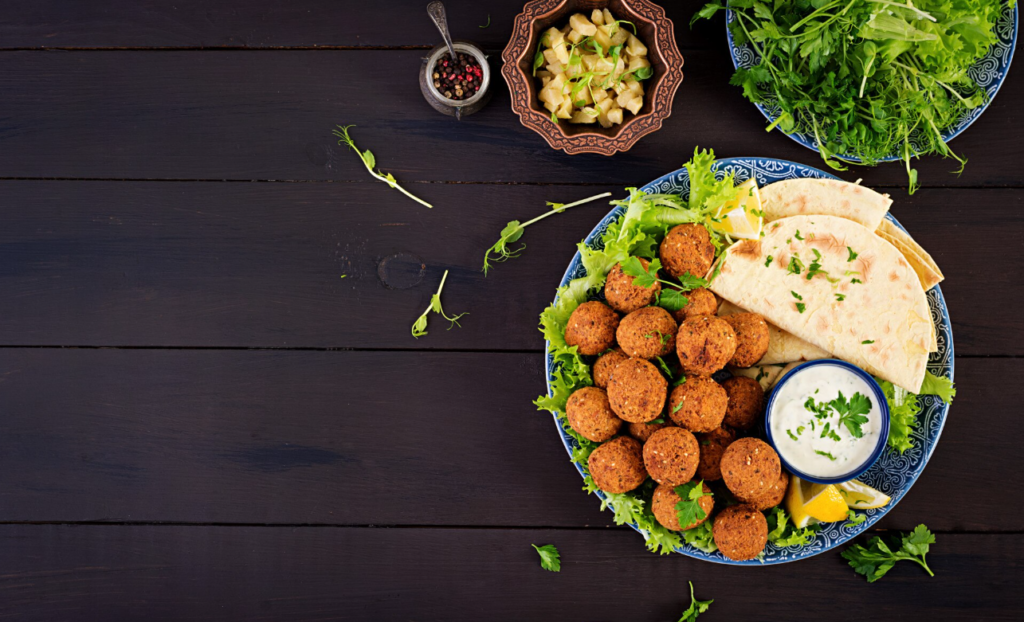
At San Francisco Mediterranean restaurants, falafel appears alongside the full range of Middle Eastern and Turkish food, sitting naturally next to kebabs, gyro sandwiches, döner, and Mediterranean platters as part of a cuisine family that shares many of the same core ingredients and flavor values. Presidio Kebab Mediterranean Restaurant near the Presidio is a well-regarded option for anyone searching for authentic Mediterranean food in San Francisco, with a menu that represents the full range of Turkish, Mediterranean, and Middle Eastern dishes that Bay Area diners have come to appreciate. For anyone looking for healthy Mediterranean food in San Francisco that includes genuinely plant-based options done with real care, this is a consistent and worthwhile destination.
Falafel also holds up well for takeout, which makes it a practical choice for anyone relying on the best takeout Mediterranean food in SF. Fresh falafel is best immediately, but wrapped in flatbread with tahini and vegetables it retains its character reasonably well for the drive home, especially if the sauce is packed separately and added at the table.
Falafel is a food that rewards attention. When it is made well, with soaked raw chickpeas, real fresh herbs, the right spices, and oil at the right temperature, it produces something that is genuinely delicious, nutritionally valuable, and connected to one of the oldest and most interesting food traditions in the world. Understanding how it is made makes every bite more interesting, and knowing what to look for makes it much easier to find the real thing rather than a pale imitation. In a city like San Francisco, where the food culture takes these distinctions seriously, finding great falafel is entirely possible. You just have to know what you are looking for and be willing to order it fresh.