
The Difference Between Doner and Shawarma
They look almost identical. A tall column of stacked meat rotating slowly on a vertical spit, getting shaved off in thin slices as the outer surface reaches the right temperature. The setup is the same. The visual is the same. And yet Doner and shawarma are not the same dish. If you have ever ordered one when you meant to order the other and noticed that something tasted different, you were not imagining it. These two foods share a cooking method and a general concept, but they come from different cultures, use different spice blends, get served with different accompaniments, and produce a noticeably different eating experience when made properly.
The confusion is completely understandable. Both dishes have spread far beyond their regions of origin, and in many cities around the world they get used interchangeably on menus. But anyone who has eaten deeply in Turkish restaurants and Lebanese or Syrian restaurants knows that these are distinct things with distinct identities. This guide explains exactly what separates Doner from shawarma across every dimension that matters, from the history and origin of each dish to the specific spices, the bread, the sauces, and the experience of eating them.
Where Each One Came From
The origin story of Doner kebab is Turkish, and it is relatively well documented. The word Doner comes from the Turkish verb dönmek, meaning to turn or rotate, which describes the cooking method exactly. Historical records point to the city of Bursa in northwestern Turkey as the place where Doner in its modern form was developed in the 19th century. A cook named Iskender Efendi is often credited with the innovation of stacking seasoned meat on a vertical spit and cooking it upright, a departure from the horizontal skewer cooking that had defined kebab preparation for centuries before.
The dish spread quickly through Ottoman cities and became a staple of Turkish street food culture and sit-down restaurants alike. When Turkish workers migrated to Germany in the 1960s and 1970s, they brought Doner with them, and the German Doner kebab in a bread roll became one of the most popular fast foods in Europe. The gyro, which Greek immigrants introduced to the United States and which became widely popular here, is a direct adaptation of the Doner concept, further modified in spice and serving style.
Shawarma has a different origin story, though the two are connected. The word shawarma is an Arabic adaptation of the Turkish word çevirme, which also means turning, reflecting the shared cooking method. Shawarma developed across the Levant, which covers modern-day Lebanon, Syria, Jordan, and Palestine, and became deeply embedded in the street food and casual dining cultures of those countries. While the vertical spit concept came from Turkey, the Levantine cooks who adopted it transformed it completely with a different spice palette, different meat preparations, and a different set of accompaniments that reflect their own regional food traditions.
So the short version of the history is this: Doner came first, developed in Turkey, and shawarma developed as a regional adaptation across the Arab world, particularly the Levant, that took the Turkish cooking method and applied it to an entirely different flavor tradition.
The Meat, the Marinade, and the Spices
This is where the most significant differences appear, and it is the area that most directly explains why the two dishes taste so different even when they look the same on the spit.
Doner is typically made from lamb, beef, or chicken, sometimes a combination. The meat gets layered onto the spit in thin slices with fat layered between the leaner cuts to keep everything moist during the long cooking process. The marinade and seasoning used for Turkish Doner reflects the Turkish spice tradition. Cumin, allspice, black pepper, red pepper flakes, garlic, and sometimes a small amount of oregano go into the seasoning. The overall flavor profile is warm and savory with a mild heat and a slightly smoky depth that develops as the outer surface of the meat caramelizes on the rotating spit.
Shawarma uses a distinctly different spice blend that immediately marks it as Levantine rather than Turkish. The classic shawarma marinade includes allspice, cinnamon, turmeric, coriander, cumin, cardamom, and cloves, along with garlic and sometimes a splash of vinegar or lemon juice. The result is a warmer, slightly sweeter, more aromatic flavor profile compared to Doner. The cinnamon and cardamom in particular give shawarma a character that has no real equivalent in Turkish Doner. Lamb and chicken are the most common proteins in shawarma, with beef appearing in some regional versions.
The marinade goes deeper in shawarma preparation than in most Doner traditions. Shawarma meat is typically marinated for several hours or overnight before being loaded onto the spit, which allows the warm spices to penetrate the meat fully. Doner seasoning is often applied between layers as the meat is stacked rather than through a long pre-marinade, which produces a slightly different flavor distribution in the final product.
Here is a quick side-by-side look at the spice differences:
- Doner: cumin, allspice, red pepper flakes, black pepper, garlic, sometimes oregano.
- Shawarma: allspice, cinnamon, turmeric, coriander, cardamom, cloves, cumin, garlic.
- Doner flavor result: savory, warm, mildly spiced with a slightly smoky edge.
- Shawarma flavor result: aromatic, warm, slightly sweet from cinnamon and cardamom, more complex spice layering.
The Bread, the Sauces, and How Each Is Served
The spice difference alone would be enough to distinguish these two dishes, but the way they are served creates an equally significant difference in the eating experience.
Turkish Doner gets served in a few distinct ways depending on the setting and region. The most common restaurant presentation is over rice with salad and a yogurt-based sauce on the side. Yogurt appears throughout Turkish Doner service because it pairs naturally with the savory, mildly spiced meat and provides the cooling contrast that the dish needs.
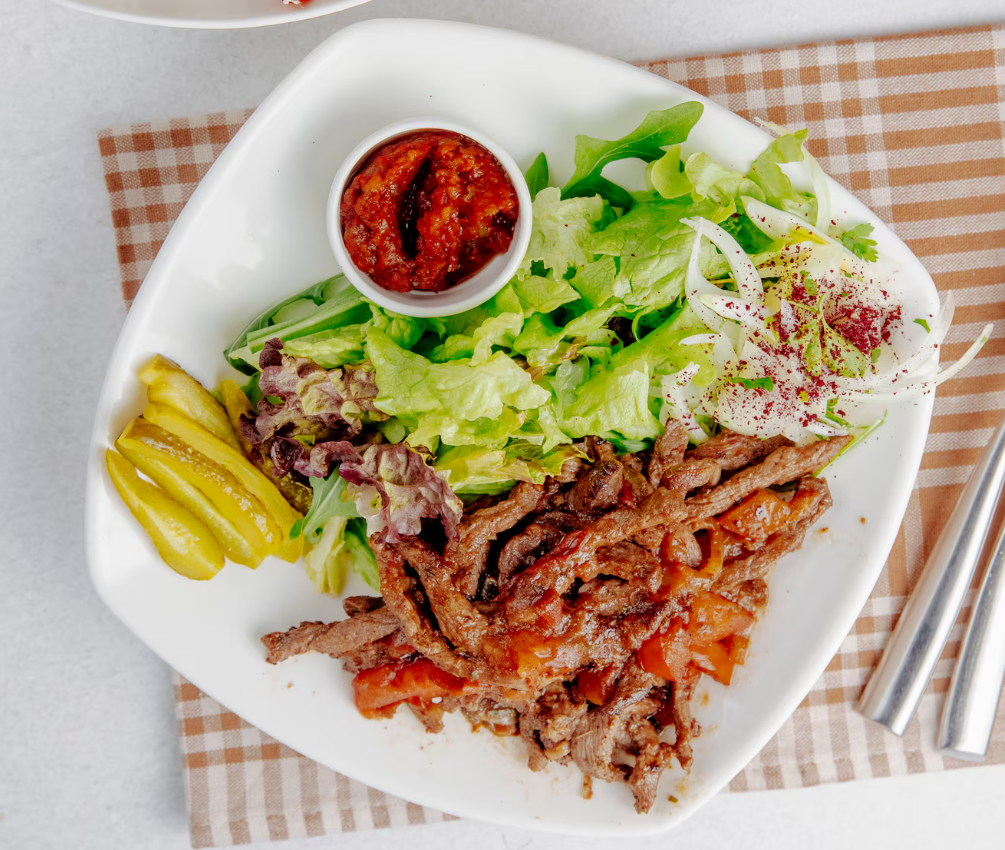
When served as a wrap or sandwich, Doner goes into thin lavash flatbread or a specific soft roll, with fresh tomato, onion, and often a garlic yogurt sauce or a simple tomato paste sauce. The bread in Turkish Doner wraps is typically thinner and more pliable than the bread used for shawarma, and the overall assembly is less layered and complex than its Levantine counterpart.
İskender kebab, which is one of the most beloved Turkish Doner preparations, serves the meat over pieces of pide bread soaked in hot butter and tomato sauce, with cold yogurt alongside. This is a specifically Turkish presentation with no shawarma equivalent, and it showcases how Doner fits into a broader Turkish culinary context.
Shawarma gets served quite differently. The most classic Levantine presentation wraps the shaved meat in flatbread, typically a thin Arabic bread called markook or a regular pita, with a specific set of accompaniments that vary slightly by country. In Lebanon, chicken shawarma often comes with toum, a powerful garlic cream sauce made from emulsified garlic and oil that has a flavor intensity unlike anything served with Turkish Doner.
Beef or lamb shawarma in Lebanon often comes with tahini sauce instead. Pickled vegetables, particularly pickled turnips that turn bright pink from the brine, are a standard accompaniment in Lebanese and Syrian shawarma that you will not find alongside Turkish Doner. Fresh parsley, tomato, and sometimes french fries go inside the wrap as well, particularly in the Lebanese street food version.
Syrian shawarma follows a similar pattern but with regional variations in the spice blend and accompaniments. Egyptian shawarma uses its own spice combination and often includes tahini and tomato. Iraqi shawarma has yet another regional character. The point is that shawarma is itself a broad family of dishes with regional variations across the Arab world, just as Doner has regional variations across Turkey.
The sauces tell the story very clearly. Doner comes with yogurt. Shawarma comes with toum or tahini. That difference alone communicates the culinary heritage of each dish. Yogurt is central to Turkish cooking in a way it is not to Levantine cooking. Toum and tahini are Levantine pantry staples that rarely appear in traditional Turkish preparations.
Tasting the Difference in San Francisco
San Francisco has enough culinary range that you can actually explore this comparison in a real and satisfying way. The city has Turkish restaurants serving proper Doner and Mediterranean restaurants offering shawarma and related Levantine preparations, which gives you the opportunity to taste the difference firsthand rather than just reading about it.
Presidio Kebab Mediterranean Restaurant near the Presidio is a well-regarded spot for Turkish and Mediterranean food in San Francisco, with Doner on the menu alongside Turkish kebabs, gyro sandwiches, hummus, warm pita, fresh salads, and Mediterranean platters. For anyone looking for the best places for gyro and Doner in SF or searching for authentic Turkish food in San Francisco, this is a consistent and respected option among Bay Area foodies who follow the local food scene carefully.
The restaurant works across many different dining situations. Families looking for family-friendly restaurants in the Presidio will find the menu broad and satisfying. For anyone who needs the best takeout Mediterranean food in SF on a weeknight, the Doner plates and wraps hold their quality well after pickup. Groups looking to share a spread of Mediterranean food will find the menu supports that style of eating naturally.
Doner and shawarma both deserve to be understood on their own terms rather than collapsed into the same category just because they come off the same type of spit. The Turkish tradition that produced Doner and the Levantine tradition that produced shawarma are both worth knowing, and the differences between them, in spice, in sauce, in bread, and in cultural context, are exactly what make each one worth seeking out and eating with full attention.